Guide
Metal Roof Cost vs. Shingles: What the Extra Money Buys
A metal roof costs more up front than shingles and lasts far longer. Here is what you get for the difference, and the hail clause most pages never mention.
Updated September 17, 20269 min readReviewed by RoofWise USA Editorial Team, editorial review: primary sources checked and independently fact-checked
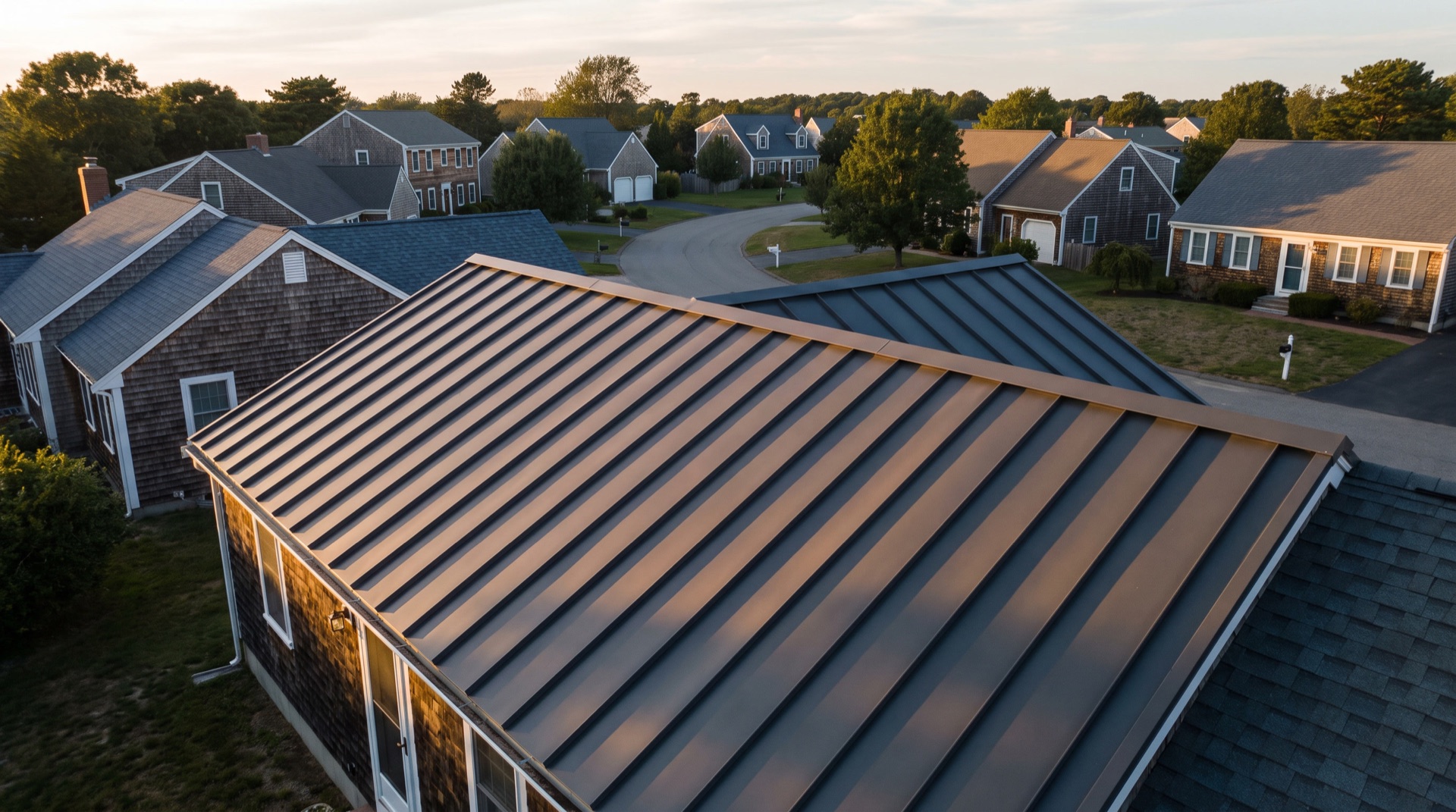
The trade metal asks you to make is stated in one line by the Department of Energy's Building America metal roofs guide: "Metal roofing tends to cost more than asphalt shingles, but a metal roof can last up to 50 years or more." IBHS's guidance on low-slope metal panel roofing says the lifecycle of such roofs "extends to 40 years and beyond," and reaches higher for one narrow product with the qualifications set out below. Whether the extra money is worth it turns on how long you will own the house, what your weather does to roofs, and one insurance detail that almost nobody writing about metal roofs mentions.
Why metal costs more than shingles up front
Three things drive the gap: the material itself, the panel system, and the labor.
Material is the obvious one, and it is a wide field. Building America says "the most common materials for metal roofing are steel, aluminum, and copper," that these "are either naturally corrosion-resistant or made corrosion-resistant when manufactured in accordance with building code-referenced standards," and that "heavier gauge metal resists damage from hail better than lighter gauge metal." How those choices translate into dollars is not something we can cite anyone for — no source on this page prices one metal against another, so ask each bidder to write down the metal, the gauge and the coating rather than taking a rule of thumb from us or anyone else.
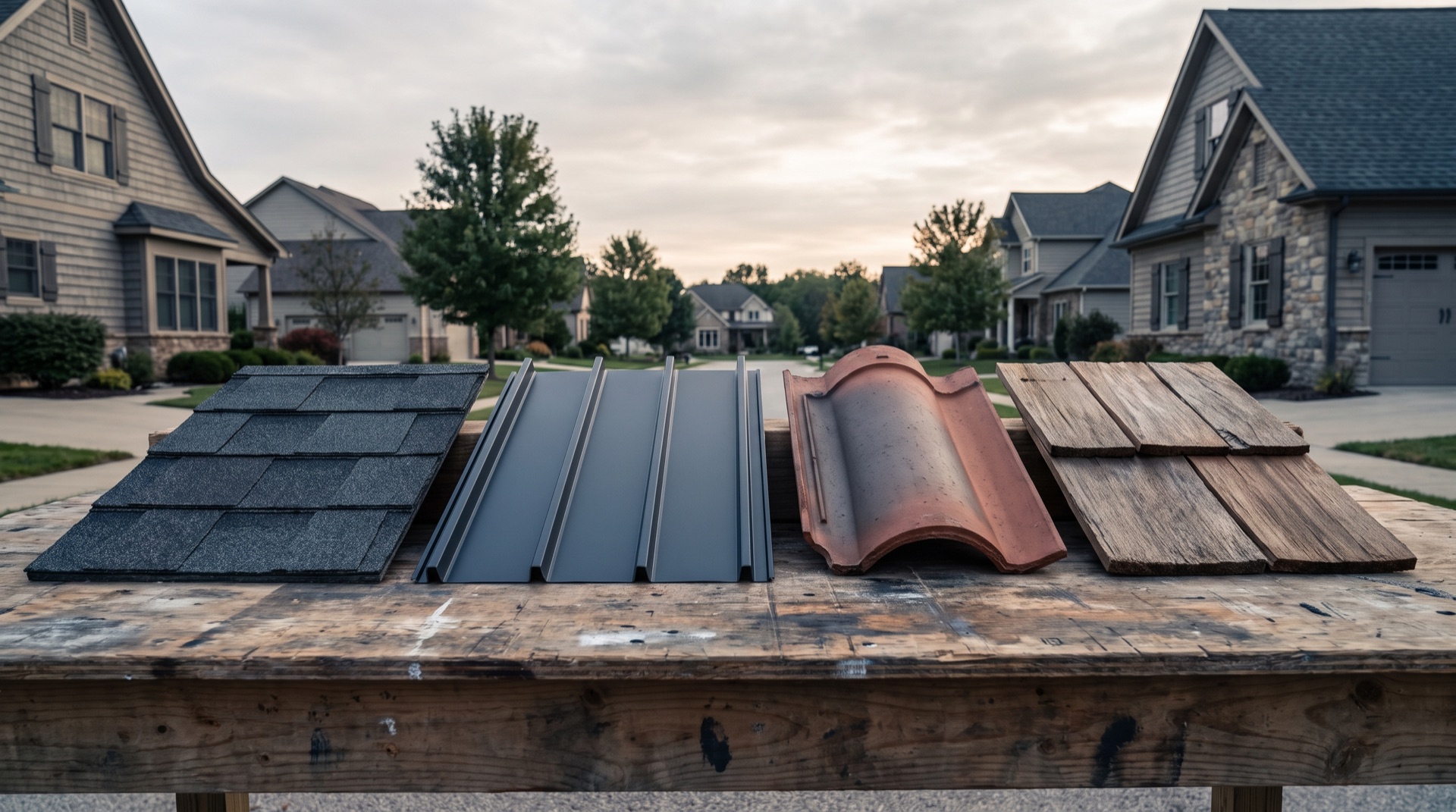
The panel system matters as much. A standing seam roof, where the fasteners are concealed under raised vertical seams, is a different job from through-fastened panels with exposed screws, which is different again from metal shingles or tiles made to imitate other materials. IBHS's low-slope metal guidance distinguishes standing seam, through-fastened and insulated metal panel systems, and they are not interchangeable in price or in performance.
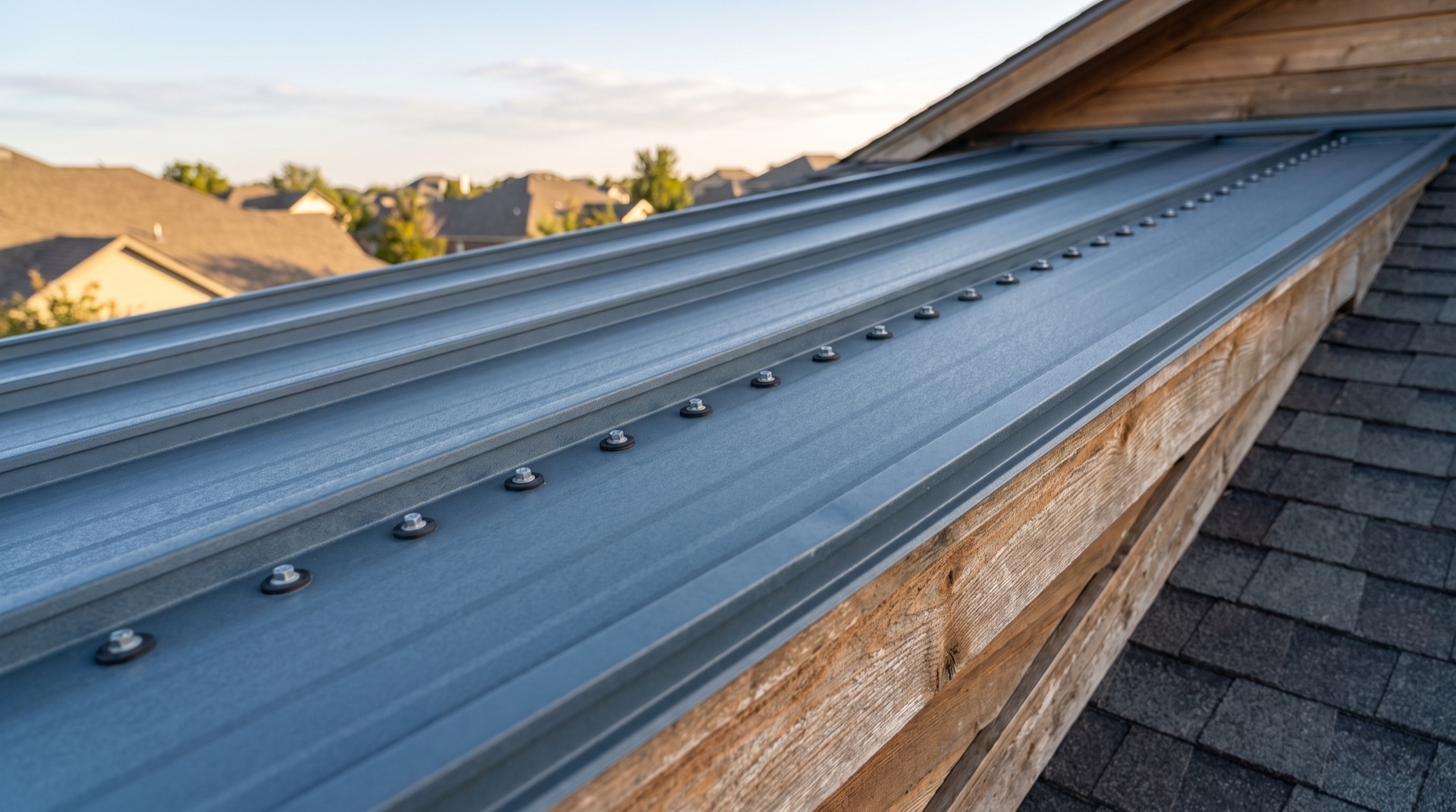
Labor is the part people underestimate, and what follows is our own explanation rather than a finding of any source below. Standing seam panels, as Building America describes them, are "site made" and "custom-made and seamed to lock the panels together, with specialized tools on-site" — work that is closer to sheet-metal fabrication than to hanging shingles. Our reading is that this narrows the pool of crews who do it well, and that a roofer who mostly hangs shingles is not automatically the right person for a standing seam roof. Ask any bidder how many standing seam roofs they have installed and where.
You will find a great many confident national averages published for both materials. We do not repeat them, because no authoritative body publishes one, prices move by region, material and year, and someone else's average tells you nothing about your roof. What is useful is a number built from your own measurements, your own state and assumptions you can see and change.
How long each one actually lasts
This is where metal earns its price, and the honest version is less tidy than the marketing version.
The Department of Energy's figure is the broadest one: "a metal roof can last up to 50 years or more."
IBHS's guidance goes further but narrower. It covers low-slope metal panel roofing, meaning roofs at a shallow pitch, and it says such a roof "may last over 40 years with little to no maintenance." The 60-year number comes with two conditions worth stating. IBHS attributes it to "the Metal Roof Service Life report sponsored by MCA and the ZAC Association" — an industry-sponsored study — and says that report "focused on the service life of unpainted 55% Al-Zn low-slope standing seam metal panel roofing in a wide range of environments across the U.S." So it is one narrow product on one narrow roof type, funded by the industry that sells it. Most houses have steep-slope roofs, so read the whole IBHS section as evidence about the material rather than a promise about your particular roof.
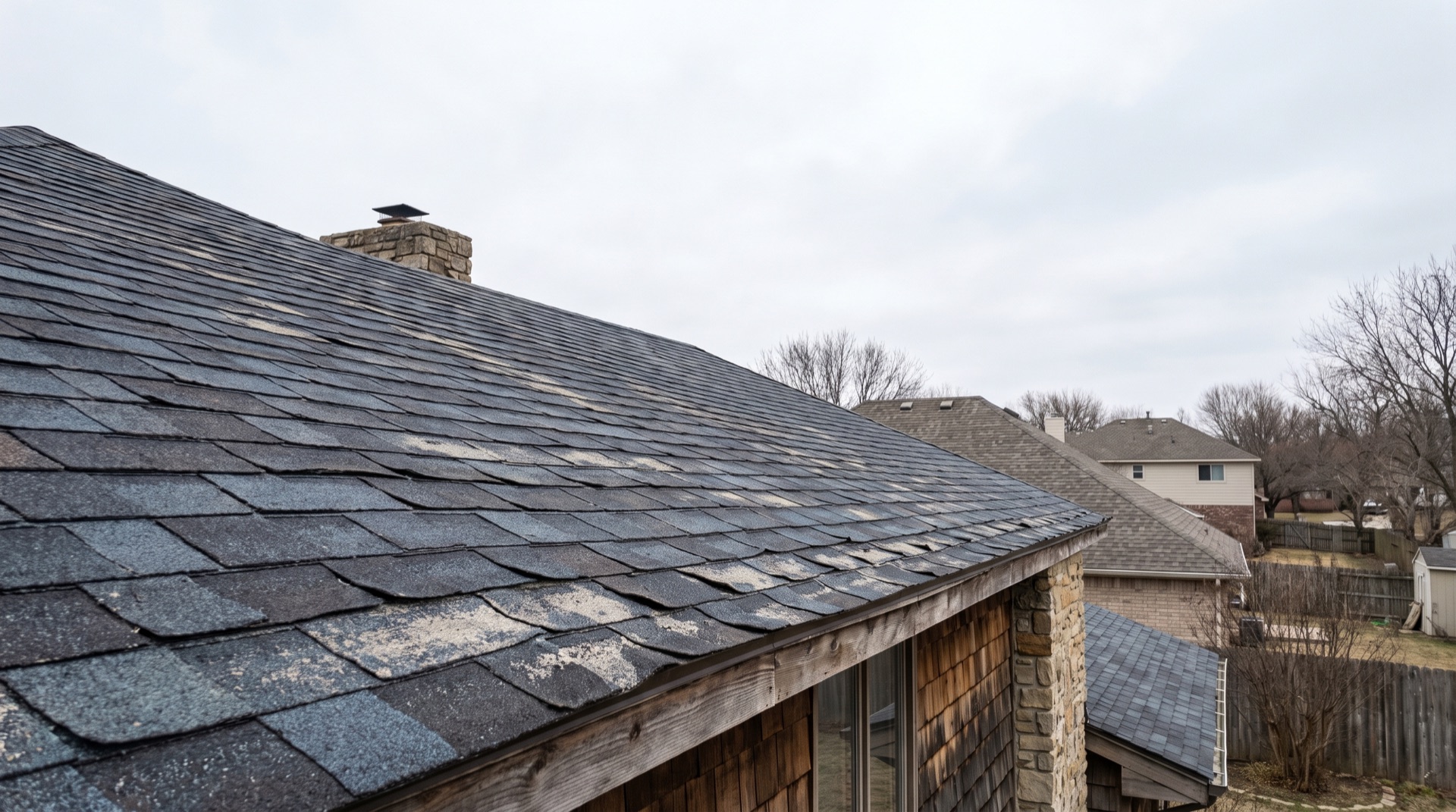
Asphalt shingles are a layered product with a finite clock. IBHS describes the granules as "coated rocks that protect the fiberglass from damaging UV rays," sitting over an oxidized asphalt layer that is "the main water-shedding ingredient in shingles," over a fiberglass mat. When granules go, the asphalt below is exposed to sunlight, and the clock speeds up.
The practical consequence: if you will own the house for five more years, the length-of-service argument is worth very little to you, and you are mostly paying for appearance and for the next owner. If you intend to be there in twenty or thirty years, you may be buying your last roof instead of your next two.
What hail really does to each material
This is the part that gets argued about, and the two materials fail in genuinely different ways.
On asphalt shingles, hail does structural harm. IBHS tests shingles with 1.5- and 2.0-inch laboratory-manufactured hailstones under its Hail Impact Test Protocol, and describes hailstones that "fracture, dent, and tear shingles." Its separate water leakage research found a clear relationship between the size of a dent and the water leakage rate, with small dents producing negligible leakage and large dents producing "quite large water leakage," and a similar relationship between tear severity and leakage. A hail-struck shingle can be on its way to letting water in.
On metal, hail dents. IBHS says small dents, "where the paint has not been cracked or flaked off, typically will not affect the weatherability or structural performance of metal panels." The exception is the coating: "if the paint is cracked or flaked, corrosion could occur," and in those cases "refinishing or replacement should be considered." IBHS also notes that metal panel roofing "does not lose its impact resistance as it ages," which is not true of a weathered shingle roof.
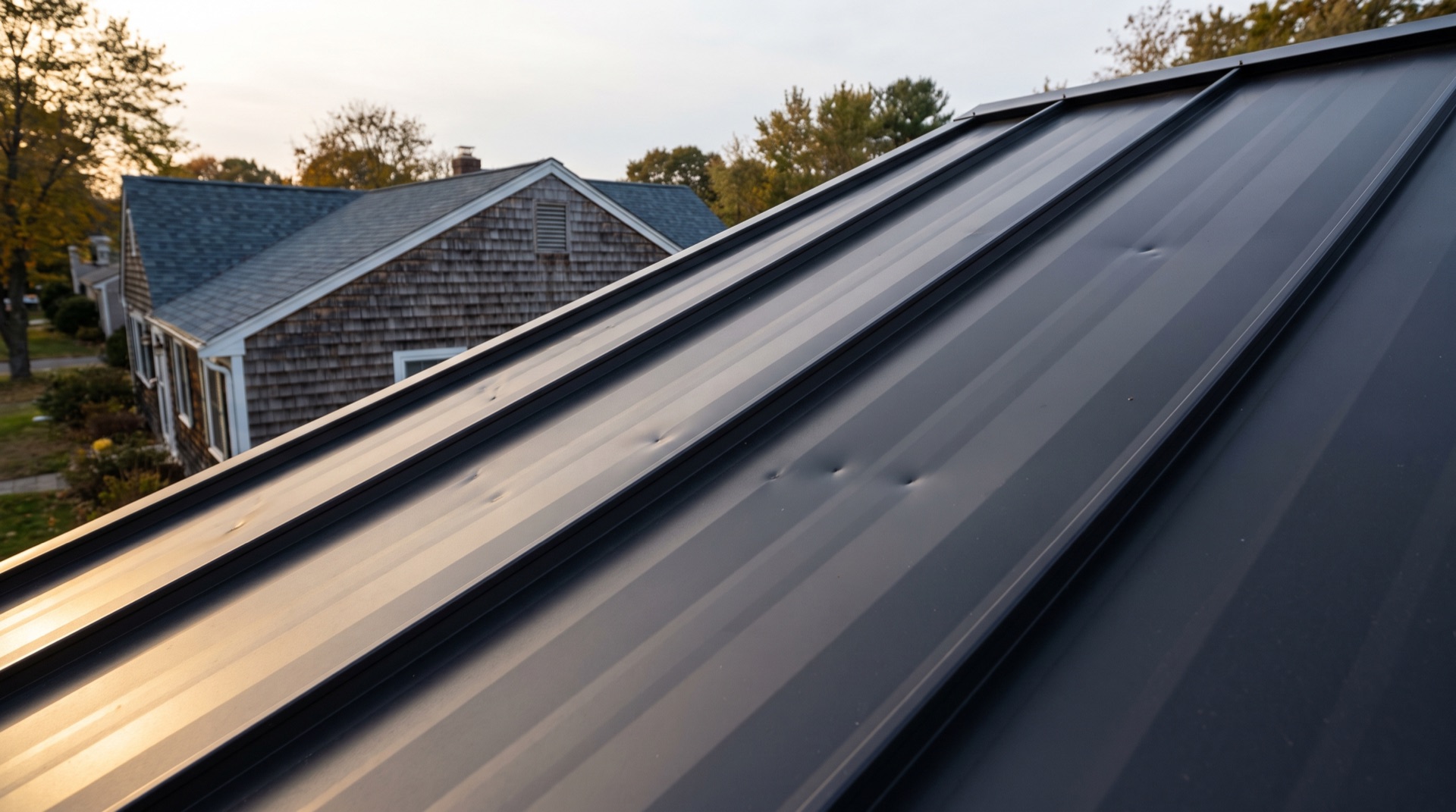
So the ordinary outcome after a hailstorm is a metal roof that looks worse and works the same, and a shingle roof that may look similar from the ground while its ability to shed water has been compromised. That difference is real, and it is the strongest functional argument for metal in hail country.
Insurance discounts, stated accurately
The Oklahoma Insurance Department says "many insurance companies offer discounts for homeowners who have impact-resistant roofing." The Texas Department of Insurance puts it as "consider using roofing materials less likely to be damaged by wind, hail, or fire. Your insurance company might give you a discount for using them."
Note what those say and what they do not. They say discounts exist and that some companies offer them. They do not say a metal roof will change your bill, and neither will we, because the credit depends on the specific product's impact rating, your insurer's own filed rules and your state. Any roofer who tells you what a metal roof will do to your renewal is telling you something they cannot know.
Two other terms are worth checking on the same phone call. TDI notes that "as roofs age, some companies will switch to actual cash value," which pays less than replacement cost, and that "if your roof is in poor condition, your company might not cover your roof at all." The Oklahoma department notes that a policy "may have a separate deductible specifically for that peril" for wind and hail. Those three details often matter more to a settlement than the roofing material does.
Energy, honestly
Metal can be part of a reflective roof, which is not the same as metal being efficient by default. The Department of Energy's Consumer Guide to Cool Roofs says that "for steep roofs, cool asphalt shingle, clay tile, concrete tile, and metal products are available," and that "installing a cool color roof on a home can shave at least 5 to 20% from the cooling costs of your energy bill. Savings vary and are greatest in hot and warm climates."
The same guide is candid about the limits. "A cool roof may increase the need for heating energy in winter by reflecting sunlight that would otherwise warm the building," though it adds that "even in mixed climates, however, winter penalties can be smaller than summer savings." It also warns that "it is rarely economical to replace a mechanically sound roof just to increase its solar reflectance."
The useful reading: if you are replacing a roof anyway and you live somewhere hot, reflectance is worth asking about, and cool options exist in both materials. It is not by itself a reason to choose metal, and a dark unreflective metal panel is not a cool roof.
If you go ahead with a replacement
Two practical notes specific to metal. Ask each roofer which panel system they are quoting, because a standing seam bid and a through-fastened bid are not comparable even when the total looks similar. And ask whether tear-off is included or whether they intend to install over the existing covering, which is a question for your roofer and your local building department rather than a matter of preference.
For everything else about getting comparable bids, verifying a license and reading a quote, the full walkthrough is in the roof replacement guide.
Bottom line
A metal roof costs more to install and, on the published evidence, serves much longer, which makes the decision mostly about how long you will own the house. In hail country it has a genuine functional edge, because dents rarely stop metal working while hail impacts can compromise a shingle's ability to shed water. Before you commit, ask your own insurer two questions in the same call: whether an impact-resistant roof earns a credit on your policy, and whether that credit comes with a cosmetic damage exclusion. Then price the job on your own roof's measurements rather than on anyone's published average.
To see metal beside the other coverings, read the material comparison. To judge how much life your current roof still has before you spend anything, start with what actually ends a shingle roof.
Common questions
Is a metal roof worth the extra cost over shingles?
It depends on how long you plan to stay and what your roof has to survive. The Department of Energy's Building America guide says metal roofing tends to cost more than asphalt shingles but a metal roof can last up to 50 years or more, so the case is strongest for owners who will still be in the house in twenty or thirty years.
Does a metal roof get damaged by hail?
Hail dents metal. IBHS guidance on low-slope metal panels says small dents, where the paint is not cracked or flaked off, typically do not affect weatherability or structural performance. Cracked or flaked paint is different, because corrosion can start there.
Will insurance pay to replace a dented metal roof?
That is your insurer's decision under your own policy, and some policies carry an endorsement that excludes cosmetic hail damage to roof coverings while still covering damage that lets water through. Ask your insurer whether yours does before you assume either way.
Do insurers give a discount for a metal roof?
Some insurers offer discounts for impact-resistant roof coverings, and the Oklahoma Insurance Department says many companies do. Whether a specific metal product qualifies on your policy is a question only your own insurer can answer.
Does a metal roof lower my cooling bill?
A reflective roof can. The Department of Energy says installing a cool color roof on a home can shave at least 5 to 20 percent from the cooling costs of your energy bill, with savings greatest in hot and warm climates. A dark, unreflective metal roof is not a cool roof.
Sources
- IBHS: Low-Slope Metal (RICOWI Roof Guide)
- IBHS: Relative Hail Impact Resistance of Asphalt Shingles
- IBHS: Water Leakage Vulnerabilities for Shingles with Hail Damage
- DOE Building America Solution Center: Metal Roofs
- Texas Department of Insurance: Commissioner's Bulletin B-0030-98 (23 April 1998), Endorsement HO-145
- Texas Department of Insurance: Texas Homeowners Policies (12 April 2018)
- Oklahoma Insurance Department: Wind and Hail
- U.S. Department of Energy: Consumer Guide to Cool Roofs
- Texas Department of Insurance: Insurance and your roof
- IBHS: Roof 101
By RoofWise USA Editorial Team. First published September 17, 2026. Advertiser disclosure