Guide
How Long Does a Shingle Roof Last? What Actually Ends One
A warranty length is not a forecast. What granule loss, sealant failure, heat and hail really do to a shingle roof, and why its age changes the money.
Updated September 17, 20269 min readReviewed by RoofWise USA Editorial Team, editorial review: primary sources checked and independently fact-checked
How long does a shingle roof last? Plan on roughly two decades rather than the number printed on the wrapper. HUD's estimated useful life table, used for capital needs assessments, assigns an asphalt shingle roof 20 years, against 25 for wood shingle and 75 for slate. What ends most shingle roofs is not one storm but granules wearing away, sealant giving up and heat working on the same asphalt year after year. And once a roof is old, its age stops being a maintenance question and starts being a money question, because a policy that settles on depreciated value pays an old roof differently from a new one.
The number on the wrapper is a warranty, not a forecast
Search this question and you will get a wall of confident spans — 20 to 30 years, 15 to 50 — published by roofing companies and lead aggregators with no source under them. Those numbers are usually reverse-engineered from warranty lengths, which is the one thing a warranty does not tell you.
The FTC describes a warranty plainly as "a promise to stand behind the product", and says that "whenever there's a warranty, the law says it must be available for you to read before you buy." Its consumer advice tells you to look at how long coverage lasts, what is excluded — "if they aren't listed, assume they aren't covered" — and whether you have to pay for labor.
Under federal warranty law, a written warranty is only a "full" warranty if five things are true of it, including that "you provide warranty service free of charge" and that service goes to "anyone who owns the product during the warranty period." The FTC's business guidance puts it simply: "If any of these statements is not true, then your warranty is 'limited.'" A limited warranty can provide free replacement parts "but not labor to install the parts," and a pro rata warranty can offer only "a refund or credit that decreases during the life of the product according to a formula" — the FTC's worked example scales that credit to how much of a tire's tread has worn away, not to how many years have gone by.
So a long advertised term describes a period in which a defined and usually shrinking remedy exists for a manufacturing defect, subject to how the roof was installed and maintained. It is not an estimate of how long your shingles will keep water out of your house. Those are two different questions, and the industry has spent a long time letting them blur.
What actually ends a shingle roof
It helps to know what you are looking at. IBHS describes an asphalt shingle in Roof 101 as four layers: granules, "coated rocks that protect the fiberglass from damaging UV rays and provide color and aesthetic appeal to the shingle"; asphalt, "an oxidized layer for durability and the main water-shedding ingredient in shingles" that "also helps to hold the granules in place"; the fiberglass mat at the center; and a sealant, "a softer asphalt that activates under the heat of the sun to self-seal the shingles together following installation."
Three of those four layers fail in a way you can watch from the ground.
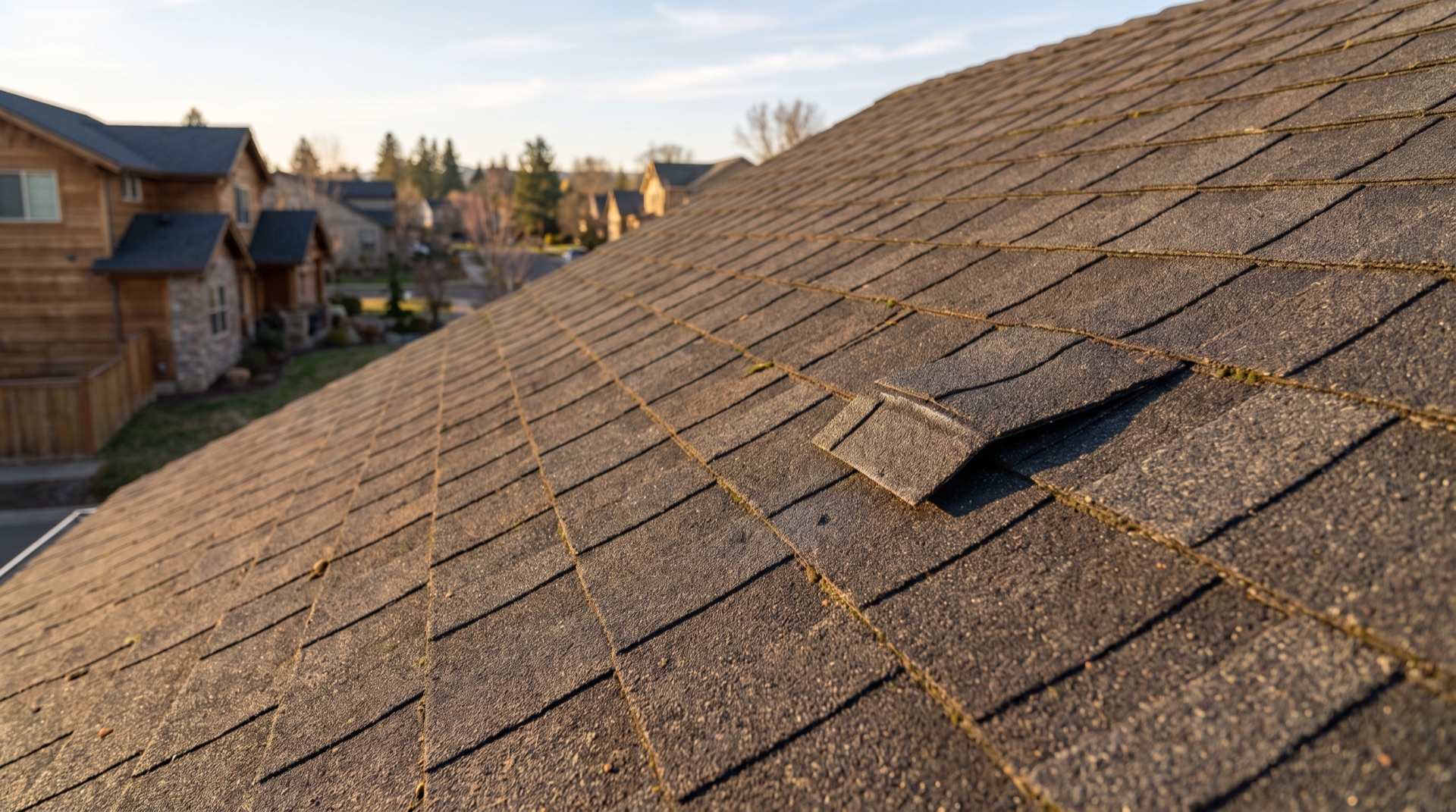
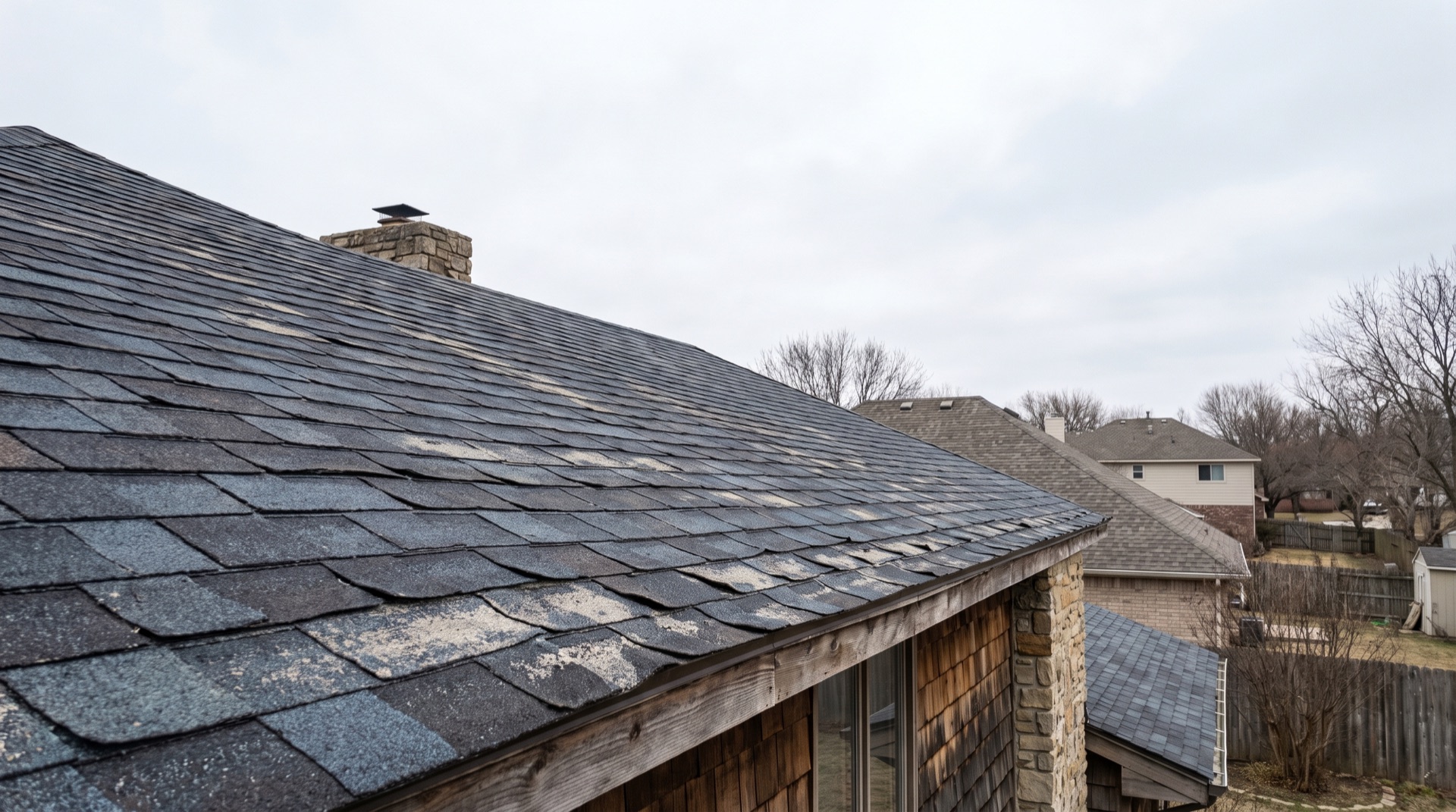
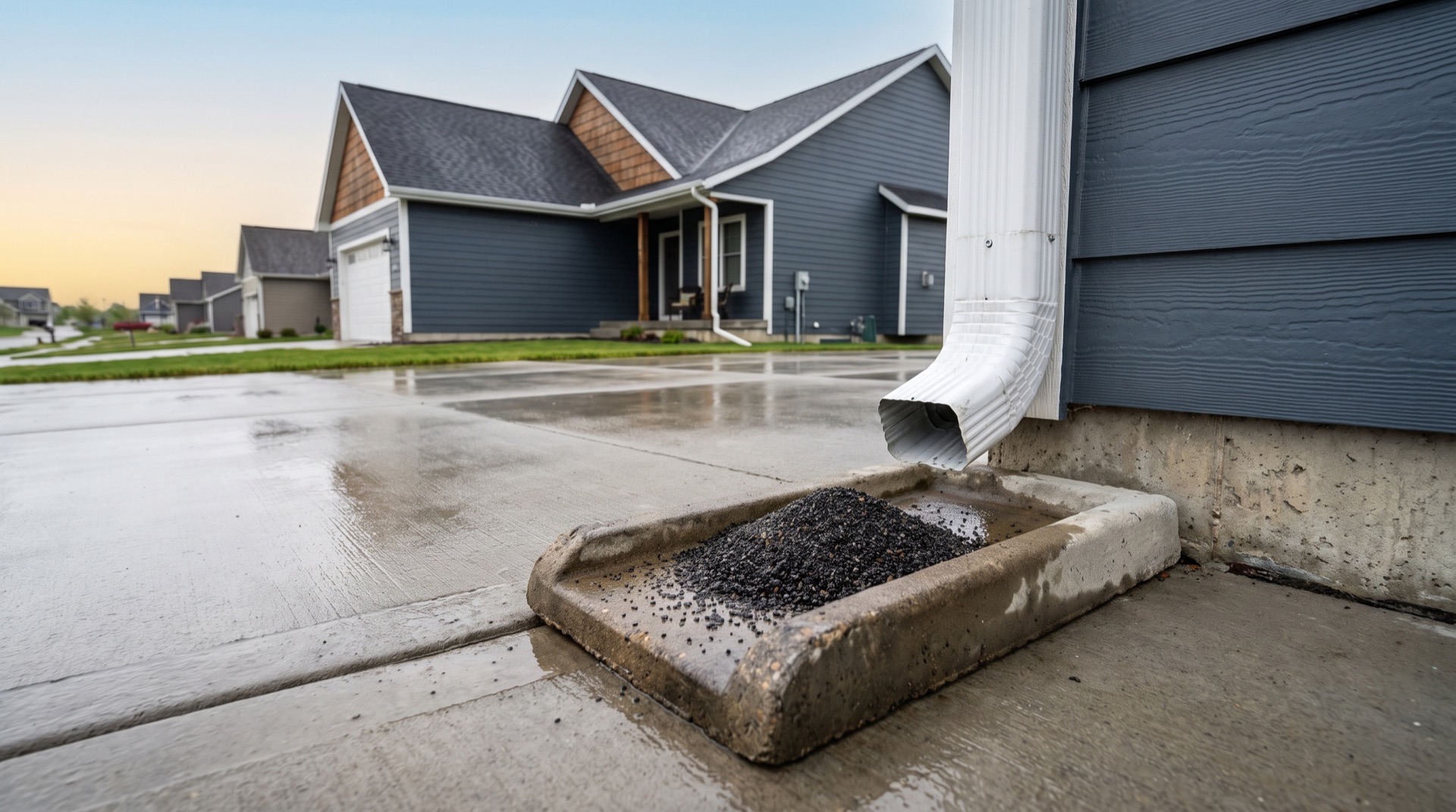
Granule loss. Granules are the roof's sunscreen. They come off gradually through normal weathering and faster after impact, and they collect at the bottom of downspouts and in gutters. Once a patch is bare, the asphalt and then the mat beneath it take UV directly.
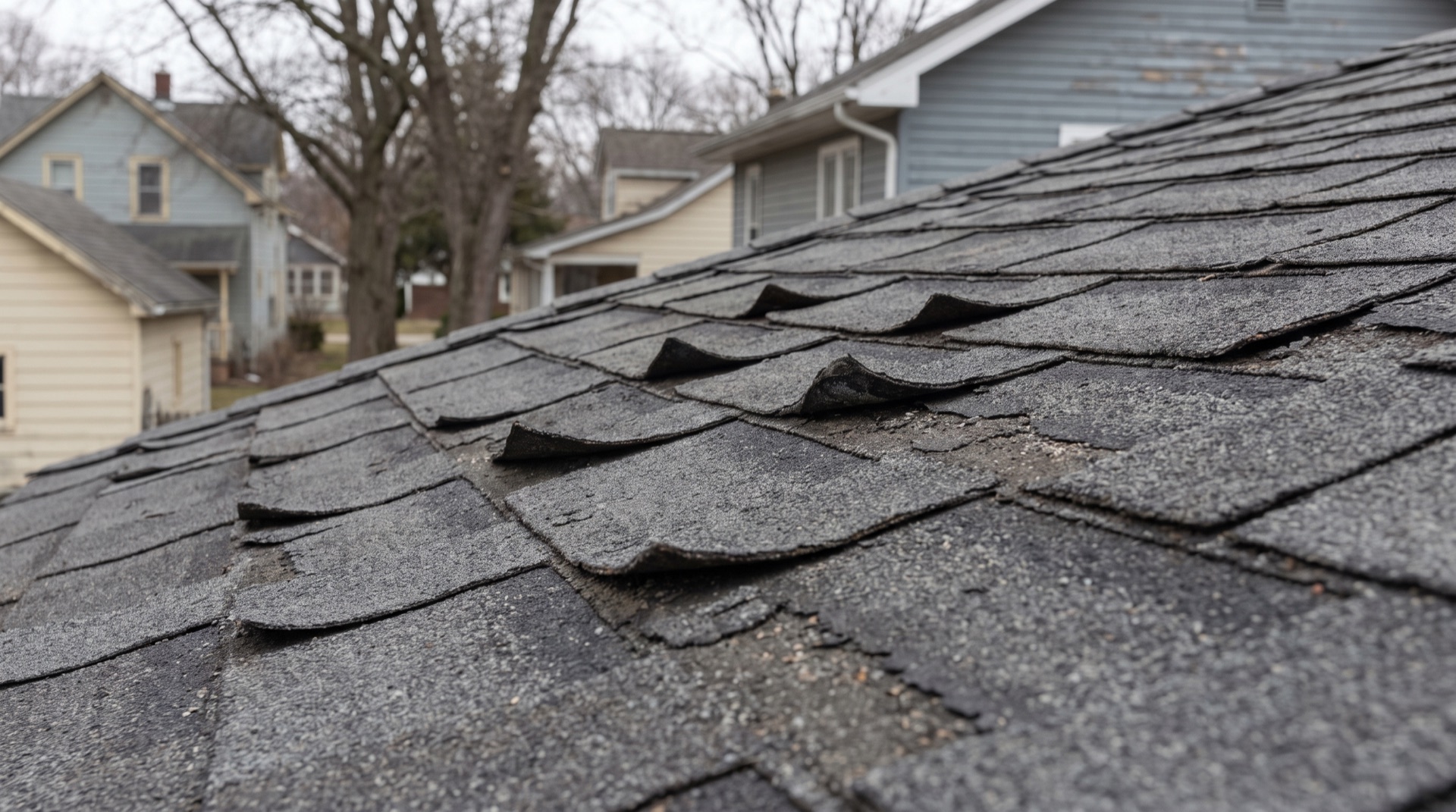
Sealant failure. The same sun heat that seals the courses together also works on the sealant for the rest of the roof's life. Shingles that lift or flutter in wind that never used to bother them are telling you something. IBHS notes that manufacturers recommend temperatures between 70°F and 80°F for sealing and that "temperatures below 40°F may not allow shingles to seal properly," so a roof installed in cold weather may not bond fully until the following warm spell.
Heat and thermal cycling. NIST's research on the long-term durability of asphalt shingle roof covers lists what shingles are up against during their service life: "extreme heat, thermal cycling, ultraviolet (UV) radiation, and freeze-thaw events, in addition to direct mechanical loads such as wind-induced uplift forces, and impact forces due to hailstones." The reason it gives for studying them comes from prior work rather than from its own measurements: its abstract says "published literature indicates that the ability of asphalt shingles to withstand direct mechanical loads may be compromised after these weathering exposures," and gives that as why assessing the effects of weathering matters. On the literature NIST is pointing at, an aged roof is not just older. It is less able to take the next hit.
That is why two roofs of the same age in different states are not the same roof. A south-facing slope in a hot, sunny climate is on a faster clock than a shaded north slope on the same house.
What hail does to the clock
A hailstorm is the moment a roof's remaining life can change without looking like it did. Hail does not have to shatter a shingle to matter. It knocks granules off, bruises the mat and cracks the sealant, and from the driveway the roof can look fine.
IBHS studied exactly this. Its research on water leakage vulnerabilities for shingles with hail damage starts from the point that "when shingles are impacted by hail, cracks, tears, or other damage to shingles may lead to water damage to the roof," and reports a clear relationship between "the size of a dent and the water leakage rate": "small dents resulted in negligible water leakage," while large dents produced "quite large water leakage." On tears, IBHS found that "a tear severity approaching 1 (on a 0–3 scale) allowed large amounts of water leakage."
IBHS does not put a number of years on what hail costs a roof, and neither will we. What the research supports is narrower and more useful: damage too small to see from the ground can still be the path water takes, and the shingle that took the hit is worse at its job afterwards.
How to find out how old your roof actually is
You cannot answer any of this without the date, and a surprising number of homeowners do not have it.
Places it usually lives: the permit record held by your city or county building department, the closing file from when you bought the house, the seller's disclosure, a prior home inspection report, or an insurance underwriting inspection your carrier ordered at some point. If the roof was replaced under a past claim, the claim file has it.
If nothing gives you a date, a roofer or an inspector can estimate the age from the shingle profile, the granule condition and the flashing. Treat any estimate you are given by someone who wants the replacement job as a number to verify, not a fact.
Why your roof's age shows up in the settlement
This is the part that makes the age question financial rather than academic.
Insurance turns on cause, not condition. The Texas Department of Insurance is blunt about it: "your insurance company won't pay for a new roof just because it's old or worn out." A worn-out roof is a maintenance expense. Where age bites is when there is a covered event, because age decides how much of the repair cost is yours.
The mechanism is the settlement basis. The National Association of Insurance Commissioners explains it this way: with replacement cost coverage "your policy will pay the cost to repair or replace your damaged property without deducting for depreciation," while with actual cash value "your policy will pay the depreciated cost to repair or replace your damaged property." And the NAIC says insurers base depreciation on "the condition of the property when it was lost or damaged, what a new item would cost, and how long the item would normally last."
Read that last clause again. "How long the item would normally last" is precisely the 20-year sort of assumption this page opened with, and it is doing the arithmetic on your settlement.
The Texas Department of Insurance publishes a worked example of the effect, for a home insured at $200,000 with a 2% ($4,000) deductible and a roof costing $10,000 to replace after a covered storm:
| Roof age at the loss | Replacement cost coverage pays | Actual cash value coverage pays |
|---|---|---|
| Any age | $6,000 | — |
| 5 years | — | $4,500 |
| 10 years | — | $3,000 |
| 20 years | — | $0 |
Same storm, same deductible, same roof. The difference is a term on the declarations page and a date on a permit.
Two things make this worth checking before you need it rather than after. TDI notes that "as roofs age, some companies will switch to actual cash value. And if your roof is in poor condition, your company might not cover your roof at all." And the Iowa Insurance Division points out that many homeowners policies now carry an endorsement dealing specifically with roof settlement, which may replace replacement cost coverage with actual cash value or set "a specific amount of depreciation based on the age and type of roofing material."
Repair or replace a roof that is getting old
Age alone does not decide this. The spread of the damage and the roof's remaining life decide it together, and the honest version is that each patch on a worn roof buys less time than the last one did.
There is no national average worth quoting you here. What replacement costs depends on your squares, your pitch, how many layers come off, how much decking is rotten underneath and where you live — which is why the useful number is one built from your own roof with the assumptions visible. The full sequence, from establishing the damage to comparing bids on one shared scope, is in the roof replacement guide.
Bottom line
Treat the printed warranty as a contract term and HUD's 20 years as a planning figure, then look at what your roof is actually doing: granules in the gutter, bare or curling patches, shingles that lift in ordinary wind. If hail has been through, assume it aged the roof in ways you cannot see from the ground and have someone qualified look. And find out today which settlement basis your policy uses, because the gap between the two widens every year the roof gets older.
To turn an age into a decision, work through repair against replacement. To understand why age changes what a claim pays, read actual cash value against replacement cost.
Common questions
How long does a shingle roof last?
HUD's estimated useful life table, used for capital needs assessments, assigns an asphalt shingle roof 20 years. Your roof's actual life depends on its climate, how it was installed, how well it sealed and what has hit it since.
Is a shingle's warranty length the same as how long the roof will last?
No. A warranty is a contract about defects with its own exclusions, conditions and duration, and the FTC notes a limited warranty can cover replacement parts but not the labor to install them, and that a pro rata warranty pays only a refund or credit that decreases according to a formula. It is not a prediction of how long your roof will shed water.
Does hail damage shorten the life of a shingle roof?
Hail can dent or tear shingles without looking dramatic from the ground, and IBHS research found a clear relationship between the size of a dent and the water leakage rate through the shingle. Whether a particular roof was damaged, and how much life it has left, is for a qualified inspector to judge.
Why does my roof's age matter to my insurance settlement?
The settlement basis on the policy decides whether depreciation is deducted, and the NAIC says insurers base depreciation partly on how long the item would normally last. The Texas Department of Insurance notes that as roofs age, some companies switch to actual cash value coverage.
How do I find out how old my roof is?
Try the permit record at your city or county building department, your closing file, the seller's disclosure from when you bought the house, or a prior insurance or home inspection report. If none of those say, a roofer or inspector can estimate it from the roof itself.
Sources
- IBHS: Roof 101
- IBHS: Water Leakage Vulnerabilities for Shingles with Hail Damage
- HUD: CNA e-Tool Estimated Useful Life Table
- NIST: Long-Term Durability of Asphalt Shingle Roof Covers
- FTC Consumer Advice: Warranties
- FTC: Businessperson's Guide to Federal Warranty Law
- Texas Department of Insurance: Home policies — replacement cost or actual cash value?
- Texas Department of Insurance: Insurance and your roof
- Iowa Insurance Division: Consumer Connection — Roof Coverage Options
- NAIC: Rebuilding After a Storm — Replacement Cost vs. Actual Cash Value
By RoofWise USA Editorial Team. First published September 17, 2026. Advertiser disclosure