Guide
Roof Repair vs Replacement: Cost Per Remaining Year
Roof repair vs replacement, settled with arithmetic: divide each quote by the years it buys, and skip the unsourced 30% rule the search results repeat.
Updated September 17, 20268 min readReviewed by RoofWise USA Editorial Team, editorial review: primary sources checked and independently fact-checked
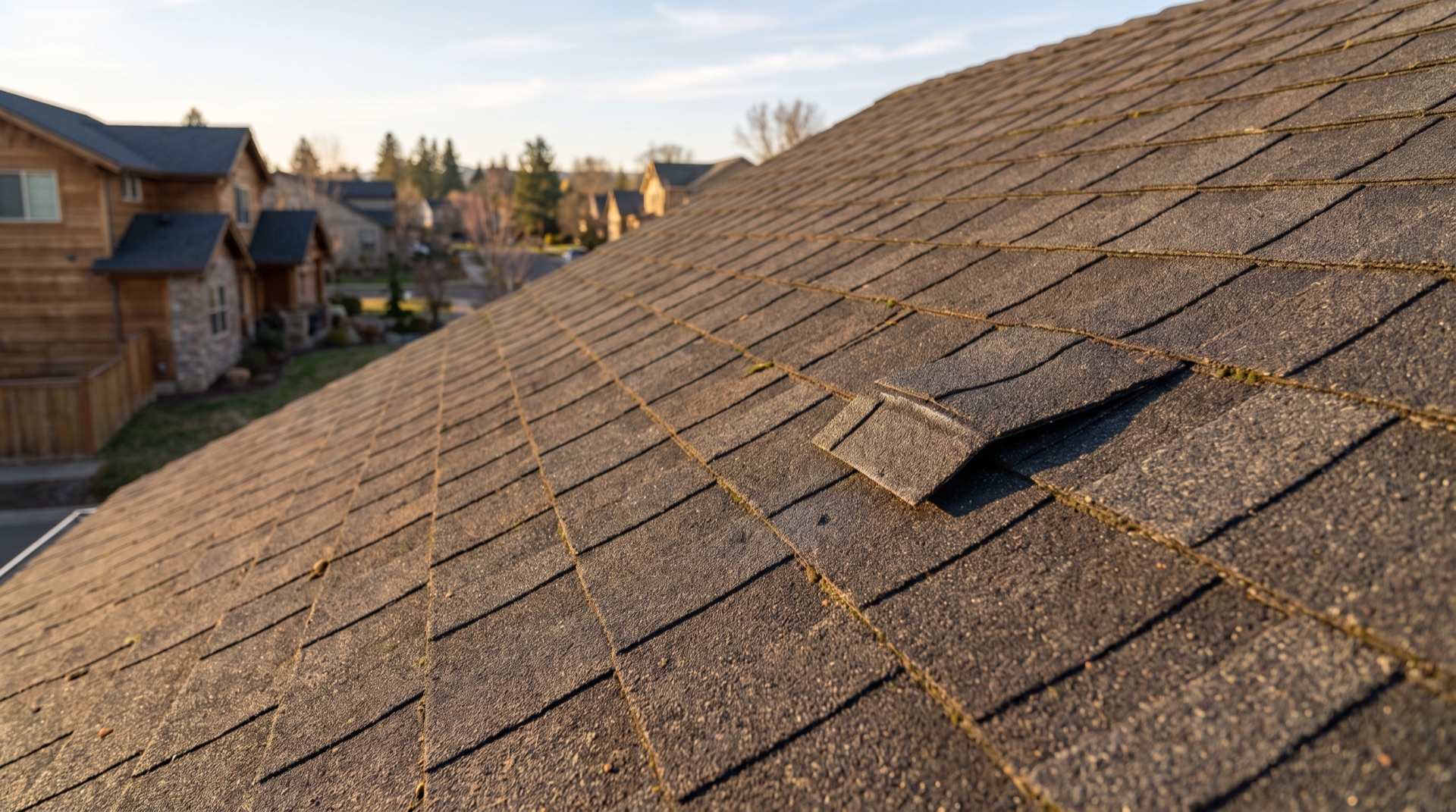
Roof repair vs replacement is an arithmetic question once you have two written quotes: divide each one by the number of years it buys you, and compare the cost per remaining year. The patch is cheaper today and frequently more expensive per year, because it buys time on a covering whose other shingles are the same age and sat through the same weather. The number that decides it is how many years the roof has left, and that comes from an inspection, not from a page like this one.
The comparison that actually decides it
Both numbers you need are years, not dollars.
Ask each roofer two questions in writing. How many more years do you expect this repair to hold? And how many years do you think the covering has left overall, patched or not? Then divide the repair quote by the first answer, and the replacement quote by the service life the new covering is warranted for. You now have two costs per remaining year, and they are comparable in a way the two headline prices never were.
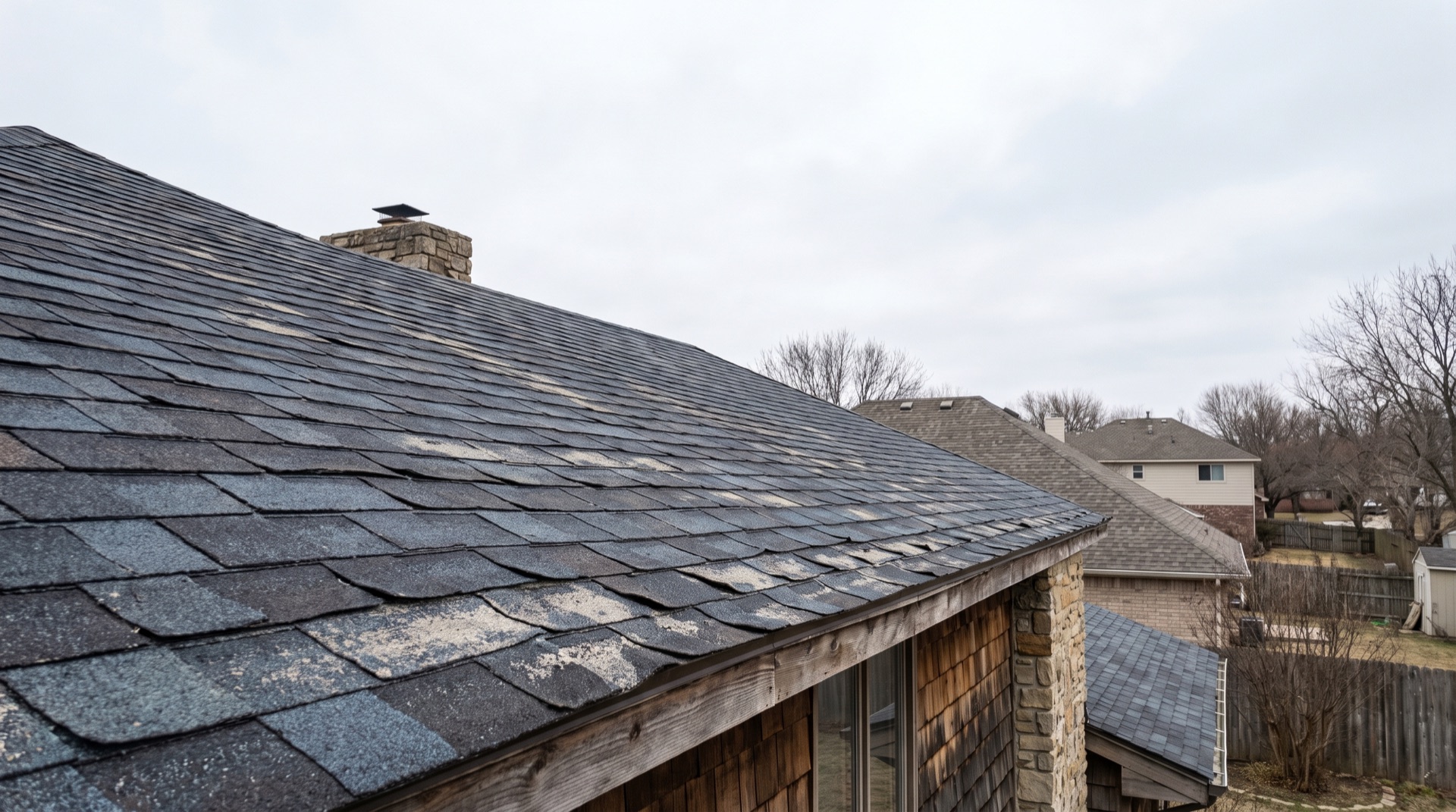
Run it on a young roof and the repair usually wins outright: the surrounding shingles have most of their life ahead, so the patch is buying years, not months. Run it on a worn roof and the arithmetic often flips, because the patch is buying a short extension on a covering that is going to need replacing anyway, and you will pay the replacement price later on top of what you just spent.
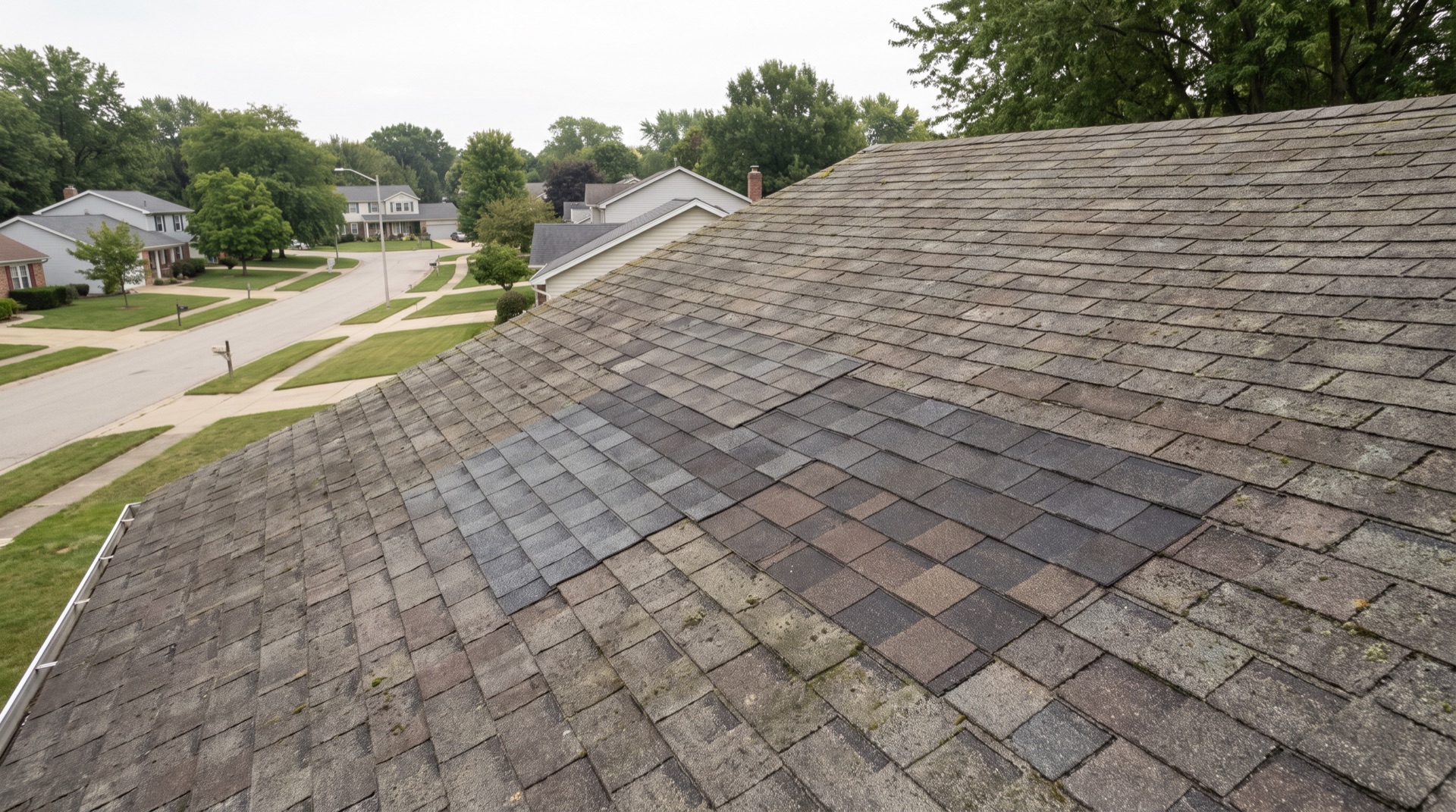
Two honest complications. The years figure is an estimate, and it is softer than the price. And how long you plan to stay in the house changes what you are actually buying: cost per remaining year only counts years you are there for, and years beyond that are value you hand to the next owner.
What the "30% of replacement cost" rule gets wrong
Nearly every page ranking for this question repeats some version of it: repair if the repair costs less than 30 percent of a replacement, otherwise replace. None of them cite anyone. We could not find it published by any building code body, federal agency or research institute, and we are not going to repeat a number we cannot trace.
It also fails on its own terms. The same percentage buys completely different amounts of time depending on the roof underneath. A repair priced at a quarter of a replacement is a good purchase on a covering with fifteen years left and a poor one on a covering with three, and a rule keyed to price alone cannot tell those two apart. Cost per remaining year can, because remaining life is in the formula.
There is a real 30 percent figure in roofing, and it measures something else. The City of Springfield, Missouri's roofing bulletin says that "roof repairs involving not more than 30-percent of the complete roof area are not required to comply with the maximum number of existing roof covering layers," provided the damaged shingles are removed and no additional layers go on. That is a rule about how much of your roof the work touches, written for permitting. It has nothing to do with the ratio of two quotes, and local requirements vary, so your own building department is the place to check yours.
Why a patch after hail often keeps leaking
This is the part the price comparison hides, and it is the strongest argument for weighing remaining life rather than damage you can see.
Hail does not only break the shingles that visibly failed. The Insurance Institute for Business & Home Safety studied water leakage in hail-damaged shingles and reported "a clear relationship" between the size of a dent and the water leakage rate: small dents produced negligible leakage, while large dents leaked substantially. Separately, it reported that a tear severity approaching 1 on a 0 to 3 scale allowed large amounts of water leakage; IBHS does not rank the two against each other, and neither do we. IBHS's summary of the problem is blunt: "When shingles are impacted by hail, cracks, tears, or other damage to shingles may lead to water damage to the roof."
The damage that leaks, in other words, is a matter of degree across the whole slope, not a list of shingles that obviously failed. A repair addresses the worst of it. The shingles left in place took the same hailstones.
There is a second effect worth asking about. IBHS's work on asphalt shingle durability found that "sealant strength is a critical factor in resisting wind damage, particularly after hail impact." That sealant is what holds the courses together: IBHS's Roof 101 describes it as "a softer asphalt that activates under the heat of the sun to self-seal the shingles together following installation," and notes that shingles are laid so the tabs sit against the sealant strip of the shingle underneath. What IBHS does not say is how far across a roof a given hailstorm affects that bond, or when the consequences surface, so treat what follows as our reasoning rather than a research finding: the sealant condition of the shingles a patch leaves in place is a wind question, and it is not something visible on the day the work is signed off.
None of that makes a repair the wrong call. It means the years a patch buys on a hail-struck roof should be estimated by someone who has looked at the whole slope, not inferred from the leak you noticed.
Repair, recover and replacement are three different jobs
The words get used loosely in quotes, and they carry different work and different code requirements. Springfield's bulletin defines them plainly, as of 2026-09:
| What the work is | What it leaves behind | |
|---|---|---|
| Roof repair | "Reconstruction or renewal of any part of an existing roof for the purpose of correcting damage or restoring the pre-damage condition" | The rest of the covering, at its current age |
| Roof recover | "The process of installing an additional roof covering over a prepared existing roof covering without removing the existing roof covering." | The old covering, and the deck, unseen |
| Roof replacement | "The process of removing the existing roof covering, repairing any damaged substrate and installing a new roof covering." | New covering over a deck someone has inspected |
A recover is the cheap middle option, and codes limit it. The re-roofing section of the IRC, reproduced in East Point, Georgia's residential re-roof guide, says new roof coverings may not be installed without first removing all existing coverings where the old roof "is water-soaked or has deteriorated to the point that the existing roof or roof covering is not adequate as a base for additional roofing," where the covering is slate, clay, cement or asbestos-cement tile, or "where the existing roof has two or more applications of any type of roof covering." That guide answers the layer question directly: "No more than two (2) layers are allowed upon completion of installation."
The two options, with their downsides
Neither is clean. A patch is a smaller bill, and color-matched shingles rarely match: weathered granules have faded and the new bundle has not. On a worn covering it buys less time than the last patch did, and the money does not come off the replacement you may still be paying for in a few years.
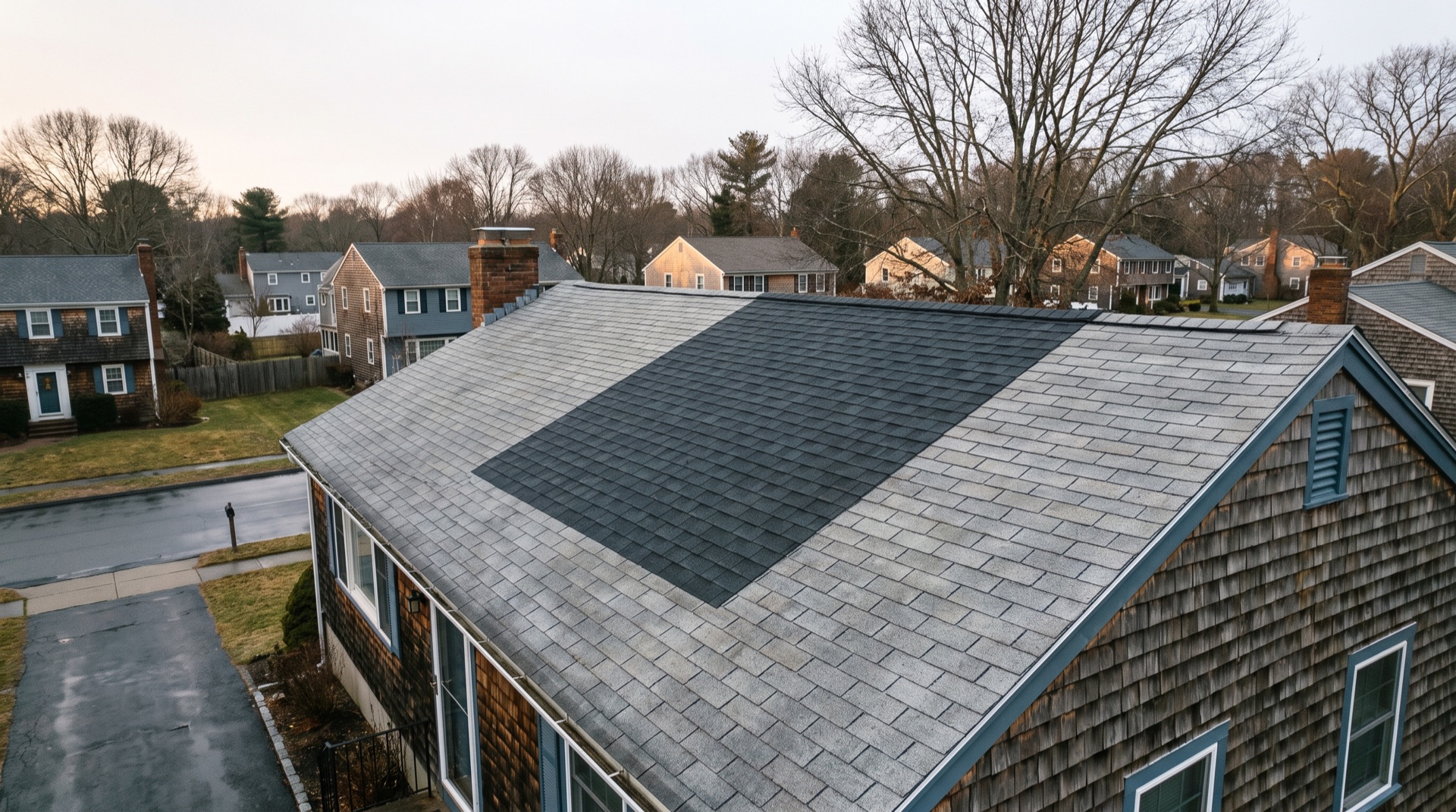
A replacement is a large bill now, paid in full for a service life you may not be in the house to use. It is also the only option that gets the deck inspected and every flashing renewed, which is where the leaks that outlive repairs usually start.
If an insurance claim is in play, remaining life is in the money too
Age does not only decide which option is cheaper per year. On some policies it decides the payment.
The National Association of Insurance Commissioners explains the two settlement bases: replacement cost coverage "will pay the cost to repair or replace your damaged property without deducting for depreciation," while actual cash value coverage "will pay the depreciated cost to repair or replace your damaged property." Insurers set that depreciation using "the condition of the property when it was lost or damaged, what a new item would cost, and how long the item would normally last" — remaining serviceable life, in other words, in a different vocabulary.
The NAIC's worked example uses two families with $15,000 of roof damage and a $1,000 deductible each. The one with replacement cost coverage was paid $14,000. The one with actual cash value coverage was paid $4,000, after $10,000 of depreciation and the deductible. The NAIC also suggests asking your insurer whether separate deductibles apply to wind or hail damage, since some policies carry special deductibles for particular parts of a home.
Bottom line
Get a written repair quote and a written replacement quote, ask each roofer how many years their work buys, and divide. The cost per remaining year tells you which one is actually cheaper, and it will sometimes contradict the price on the page. If the two roofers disagree about how much life the roof has left, settle that question before you spend anything, and read the full roof replacement guide if a tear-off is looking likely.
The remaining-life half of that arithmetic is covered in what actually ends a shingle roof. The cost half is in what moves a roof replacement price.
Common questions
How do I decide between roof repair and replacement?
Divide each written quote by the number of years the roofer expects it to buy you, and compare the cost per remaining year rather than the price on the page. The repair is almost always cheaper today, and often more expensive per year, because it buys time on a covering whose other shingles are the same age.
Is the 30% rule for roof repair vs replacement real?
No primary source publishes it. The only 30 percent figure we could find in a code document is about area, not money: Springfield, Missouri's building bulletin exempts repairs covering not more than 30 percent of the roof area from the layer-count requirement.
Why does my roof still leak after a repair?
A patch replaces the shingles in one area and leaves the surrounding ones in place. IBHS research on hail-damaged shingles found water leakage tracked the size of the dent and the severity of the tear, so undamaged-looking shingles nearby can still be letting water through.
Can a new roof go straight over the old one?
Sometimes, and building codes limit it. Under the IRC re-roofing section quoted in local permit guides, a new covering may not go over an existing one where the old roof is water-soaked or deteriorated, where it is slate, clay, cement or asbestos-cement tile, or where two or more layers are already there.
Who can tell me how many years my roof has left?
A licensed roofer who has inspected it. No web page, calculator or photo can produce that number, and it is the single input the repair-or-replace decision turns on.
Sources
- IBHS: Water Leakage Vulnerabilities for Shingles with Hail Damage
- IBHS: Asphalt Shingle Durability
- IBHS: Roof 101
- City of Springfield, MO: Roofing, Roof Recover, Roof Replacement, and Roof Repair Bulletin
- City of East Point, GA: 2018 IRC Residential Re-Roof Building Guide
- NAIC: Rebuilding After a Storm — Replacement Cost vs. Actual Cash Value
By RoofWise USA Editorial Team. First published September 17, 2026. Advertiser disclosure