Guide
Roof Replacement Cost: What Actually Moves the Number
What actually moves a roof replacement cost: squares rather than floor area, pitch, layers, decking, roofline complexity, access and material.
Updated September 17, 202611 min readReviewed by RoofWise USA Editorial Team, editorial review: primary sources checked and independently fact-checked
A roof replacement cost is built from seven things: how many squares of roof surface you have, how steep it is, how many old layers have to come off, how much decking turns out to be bad, how cut-up the roofline is, how hard the roof is to reach, and what covering goes back on. Price the same house with a different answer to any one of those and the number moves. This page explains each one so you can read your own quote line by line instead of measuring it against someone else's average.
Why this page has no average roof replacement cost
Search this and you will get a page of confident dollar ranges. Almost none of them say where the number came from, and the ones that do trace back to the publisher's own job data, a survey of its own contractor network, or another aggregator quoting a third.
No federal agency, standards body or insurance regulator publishes a national roof replacement cost. There is nothing authoritative to cite, so we do not cite anything, and we do not invent a range to fill the gap.
There is a second reason, and it matters more. An average is a single number stretched across every roof in the country: flat ranches and cut-up Victorians, 6 squares and 40, one layer and three, sound decking and rotten, a crew that can back a truck to the eave and a crew hauling bundles up a hillside. Averaging those together produces a figure that describes no actual house, including yours. The seven drivers below are what a roofer is actually pricing, and once you can put your own values against them you no longer need the average.
Roof size is measured in squares, not the square footage of your house
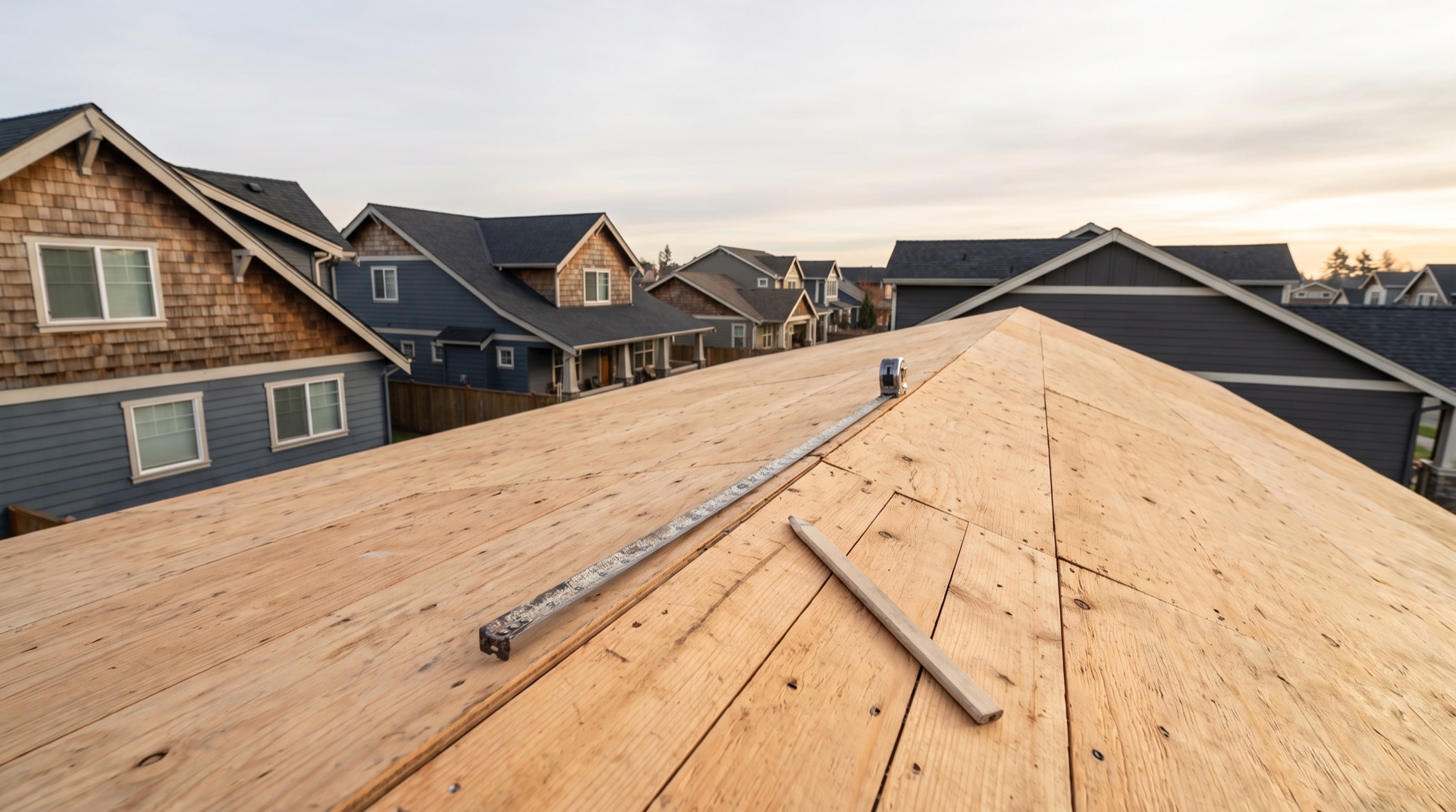
Roofers work in squares. A square is the trade's own unit of measure, not something we can point you to a code section for: 100 square feet of roof surface, measured along the slope, following the plane of the roof, not projected flat onto the ground. Every bid you are handed will be built from it.
That is why your roof is bigger than your house. A 2,000 square foot floor plan does not mean 20 squares: the roof runs out past the walls at the eaves and rakes, and every degree of pitch stretches the same footprint over more material. Two houses on identical slabs, one with a shallow roof and one with a steep one, can be several squares apart.
So the first question to ask of any quote is how many squares it is pricing and where that figure came from — a measurement on site, aerial imagery, or a guess from the sidewalk. If two bids differ and you never compared their square counts, you may be comparing two different roofs.
The seven things that move the price
1. Pitch
Pitch is written as a ratio of rise to run, like 4:12, meaning the roof climbs 4 inches for every 12 inches across. It hits the price three separate ways.
It adds surface, as above. It slows the crew — that part is our own explanation rather than a finding of any source below: a steep roof cannot be walked across the way a shallow one can, so materials go up rather than across. And it changes what the code requires underneath. Minnesota's residential code, as the City of Coon Rapids sets out in its roofing handout, requires two layers of underlayment on asphalt shingle roofs with slopes from 2:12 to 4:12, and one layer at 4:12 or greater. The same document notes asphalt shingles "shall be used only on roof slopes of 2:12 or greater," and that where an ice barrier is required, roofs with a slope of 8:12 or more need it applied "not less than 36 inches measured along the roof slope from the eave edge."
A shallower roof is not automatically cheaper, then. Below 2:12 you are out of shingle territory altogether and into a different kind of roof system with its own economics.
2. How many layers have to come off
This is the driver most people have never thought about, and it can be the difference between a straightforward job and a heavy one.
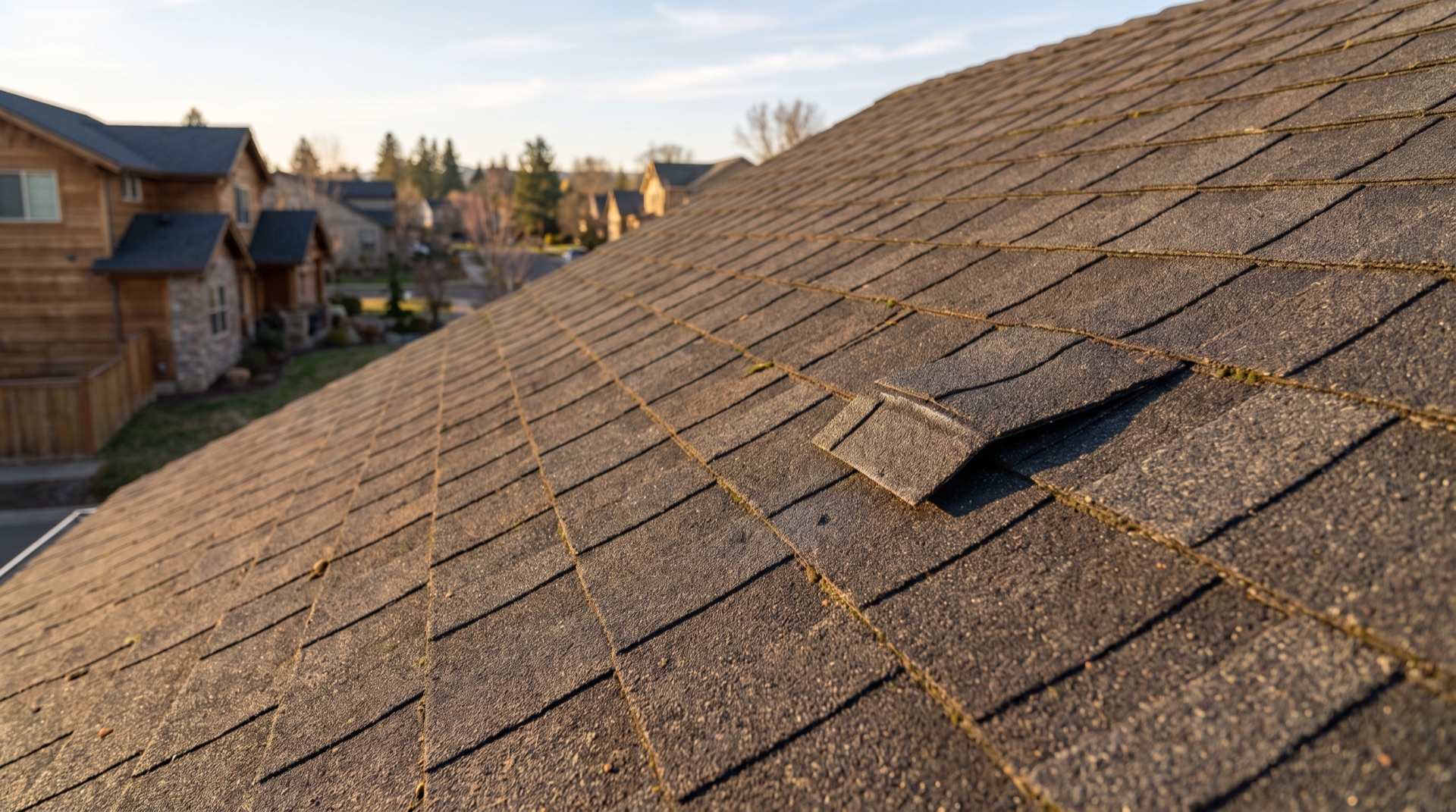
Tear-off is labor and disposal. One layer of shingles fills a dumpster; two fills two. Before that, though, it is a code question. The City of East Point, Georgia, publishing the 2018 IRC re-roofing sections in its residential re-roof guide, quotes R908.3.1.1: "New roof coverings shall not be installed without first removing all existing roof coverings" where the existing roof or covering "is water-soaked or has deteriorated to the point that the existing roof or roof covering is not adequate as a base for additional roofing," where the existing covering "is slate, clay, cement or asbestos-cement tile," or "where the existing roof has two or more applications of any type of roof covering." Its homeowner FAQ puts the ceiling plainly: "No more than two (2) layers are allowed upon completion of installation."
Coon Rapids states the replacement case in one line: "Roof replacement shall include the removal of existing layers of roof coverings down to the roof deck."
Two practical consequences. If your roof already carries two layers, a cheap recover is not on the table and any bid offering one should be questioned. And if you do not know how many layers are up there, that is a real unknown in every quote you hold — a roofer who has not lifted a shingle to check is estimating tear-off blind.
3. Decking that nobody can see yet
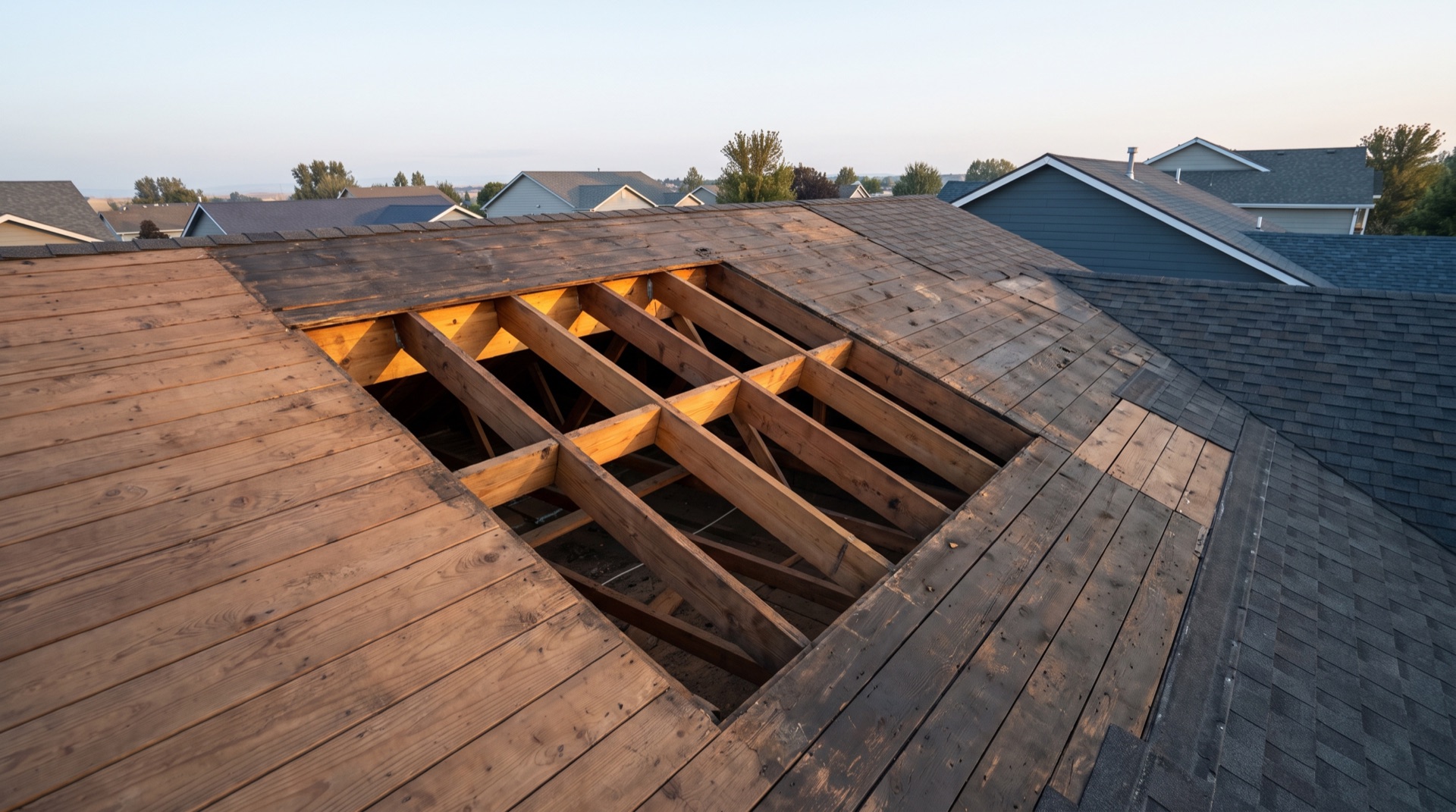
Under the covering is the deck, the sheathing the whole system fastens to. Coon Rapids requires asphalt shingles be fastened "to solidly sheathed decks or 1-inch thick nominal wood boards." East Point's prep checklist for a complete tear-off says the sheathing "must provide a rigid surface" and directs the crew to "repair or replace all boards or sheathing which are warped, cracked or delaminated between supports."
Nobody can price that in advance, because nobody can see it until the old roof is off. That is legitimate. What is not legitimate is leaving it open. A quote should state what replacing a sheet of decking costs, so the rate is agreed before anyone needs it rather than after the roof is open and you have no leverage. Ask for that number in writing on every bid, and treat a refusal as information.
4. How cut-up the roofline is
Two roofs of the same square count can be different jobs entirely. A plain gable is two planes and four edges. A roof with dormers, valleys, a chimney, skylights and walls running into it is dozens of cuts and a great deal of hand-formed metal.
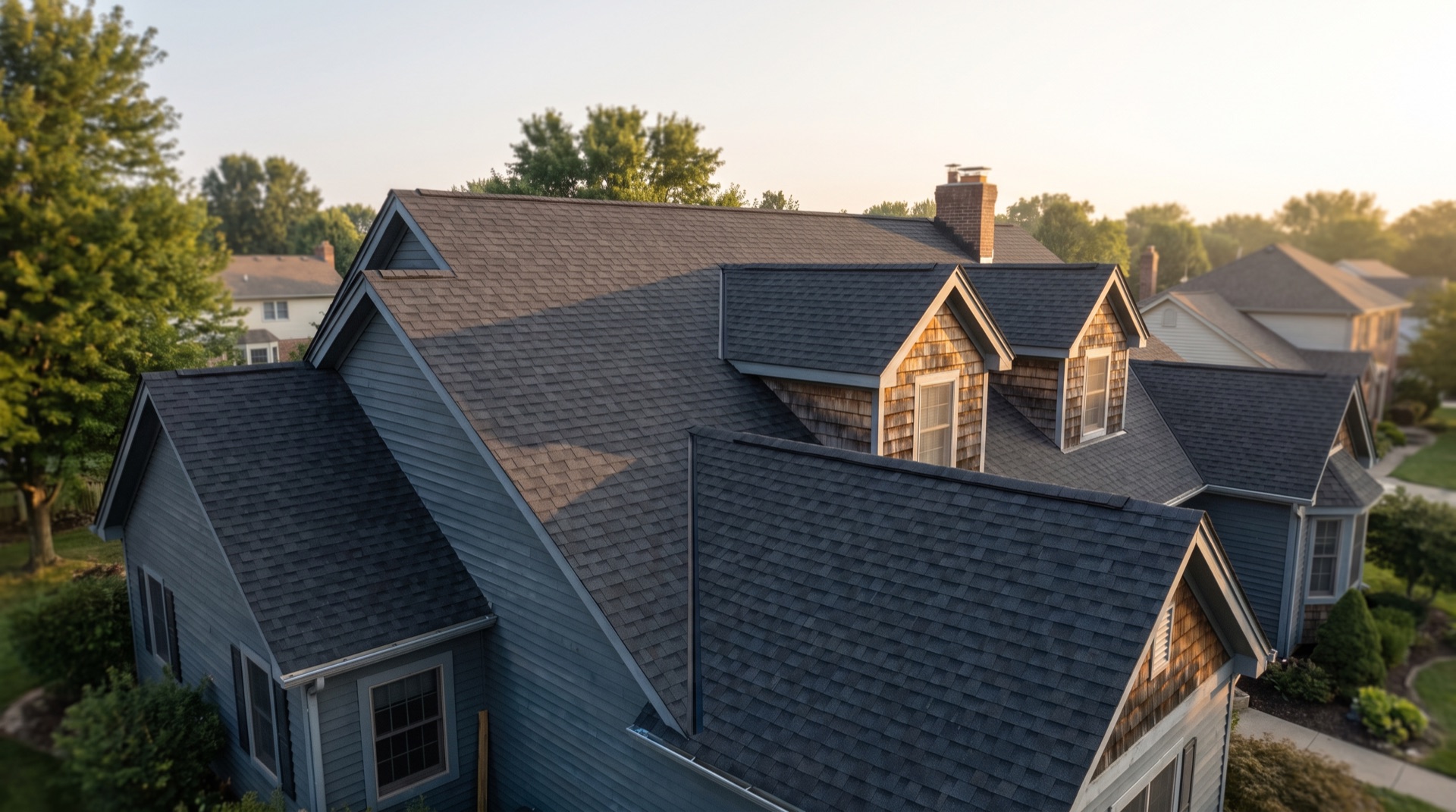
That work is required, not optional. Coon Rapids specifies flashing "at wall and roof intersections, wherever there is a change in roof slope or direction, and around all roof openings," open valleys with "a corrosion resistant metal liner at least 24 inches wide," kick-out flashing where a sloped roof stops within the plane of an intersecting wall, and "a cricket or saddle" on the ridge side of "any chimney greater than 30 inches wide."
When you compare bids, compare flashing scope specifically. A bid that renews all flashing and one that reuses what is there will not be the same price, and they are not the same roof. Those junctions are where water actually gets in.
5. Access
There is no code section for this and no published number, so treat it as a question rather than a figure: how hard is it to get materials up and waste down?
Single story with a driveway at the eave is one thing. Three stories, a narrow lot, a steep drive, a pool or mature planting under the working edge, a dumpster that has to sit down the street, restricted delivery hours — each adds hours or equipment. It is worth asking each roofer what access they assumed and where the dumpster is going, because two bidders can quietly assume different answers.
6. The covering you choose
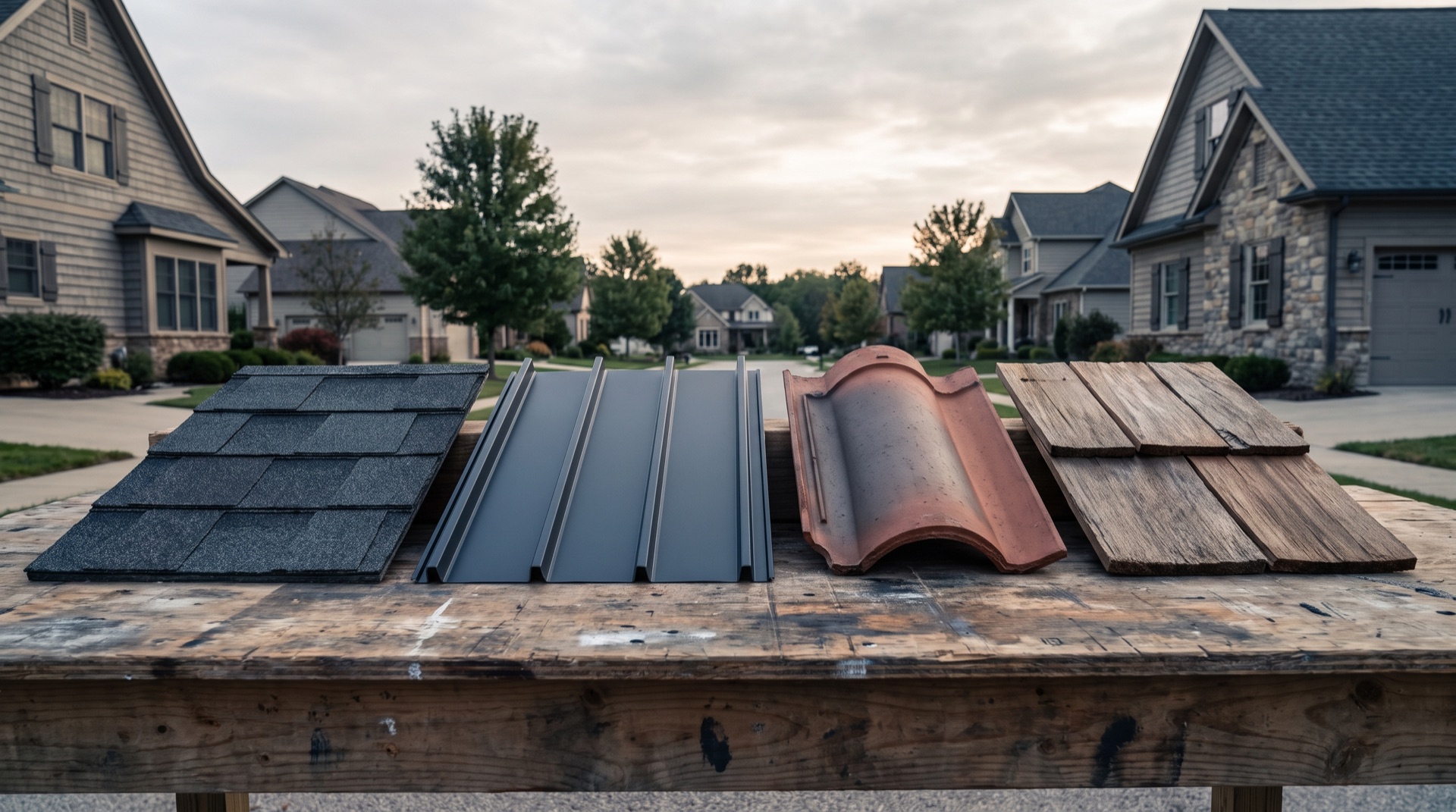
Material is the driver everyone thinks of first, and it is genuinely large, but it interacts with the others. Weight is one way: East Point's guide notes that "an engineered analysis of the roof structure is required if the roofing material type exceeds 7.5 pounds per square foot," so a heavy covering can add a structural engineering step before anyone lays anything.
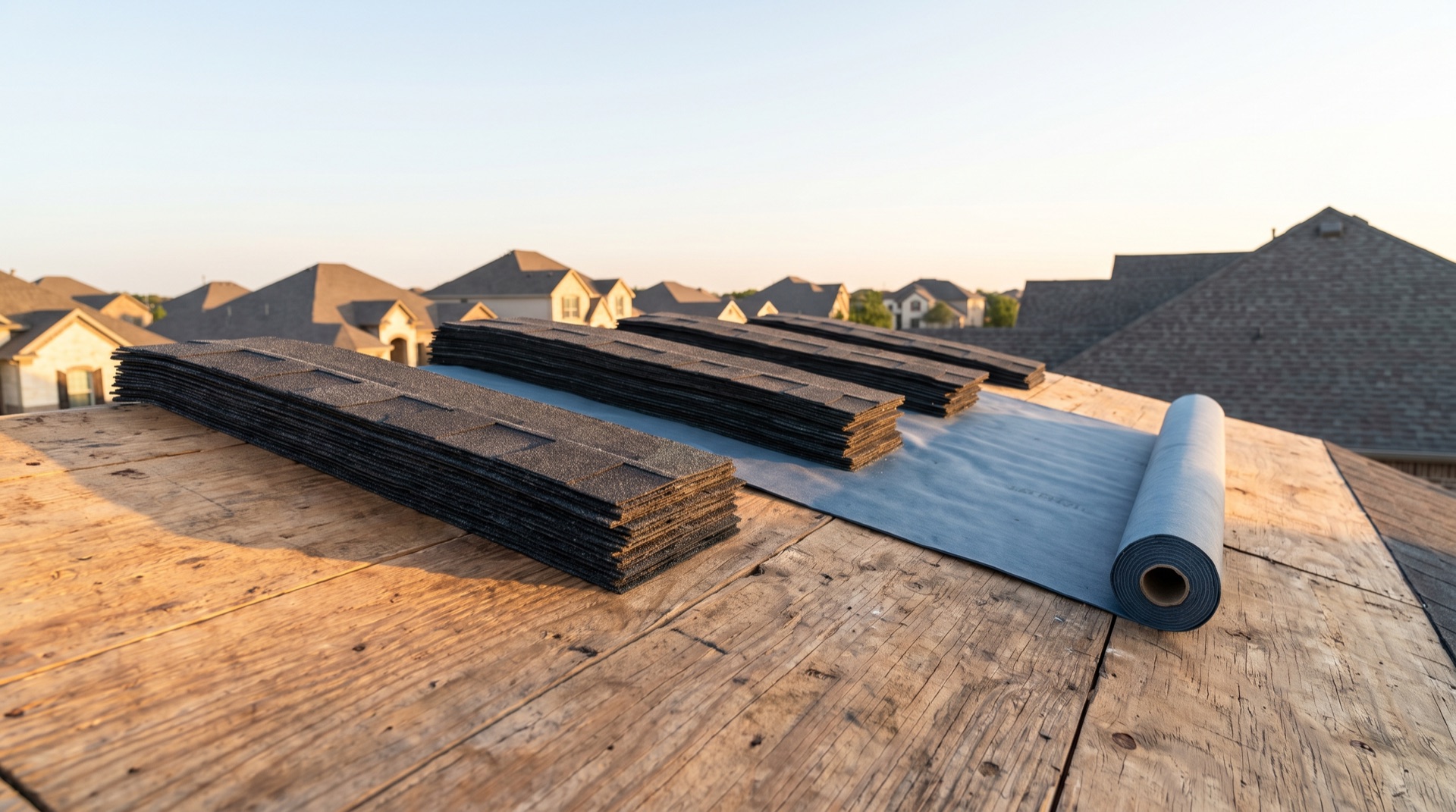
The system underneath matters too. The Insurance Institute for Business & Home Safety describes in Roof 101 how an asphalt shingle is built from granules over asphalt over a fiberglass mat with a sealant strip, and that "underlayment is fastened to the roof deck first, and then the asphalt shingles are installed on top." Comparing a bid for one covering against a bid for another means comparing the whole assembly, not the top layer.
7. Permits, inspections and the code work nobody quotes for
A re-roof is permitted work. Coon Rapids states that roofing "requires a building permit," and lists ice barrier, underlayment and final inspections. East Point's guide explains the permit "allows the building department to inspect for potential hazards and unsafe construction," that "the permit holder must call for a Final Roof inspection," and that a mid-roof inspection may be required.
Fees and requirements vary by jurisdiction, so there is no number to give you. What matters for reading a quote is whether the permit is in it, and who is pulling it. East Point answers the ownership question directly — asked whether the owner may do the re-roof themselves, the guide says yes — though that is a question about permits, not about whether standing on a roof is a sensible place to learn.
How to read your own quote
Once you know the drivers, a bid stops being a single number and becomes a set of assumptions you can check. Look for each of these in writing:
| What to look for | Why it moves the price |
|---|---|
| Squares, and how they were measured | The whole bid scales from this |
| Pitch | Surface, labor, staging, underlayment layers |
| Layers being removed | Tear-off labor and disposal, and whether a recover is even permitted |
| Price per sheet of decking | The one line that changes after work starts |
| Flashing: renewed or reused, and where | Valleys, chimneys, skylights, wall junctions |
| Underlayment and ice barrier specified | Varies with pitch and climate |
| Permit, inspections and disposal included | Often left out of the headline figure |
| Access assumptions and dumpster placement | Silently different between bidders |
| Workmanship and material warranty terms | Two bids at one price are not equal without this |
Hand every roofer the same list and the bids become comparable. East Point's own hiring tips say to "hire only licensed contractors," "get at least 3 bids," get references, "get it in writing," and not to make final payment until you are satisfied.
The main roof replacement guide covers choosing a roofer and verifying a license in more detail.
Where insurance comes into the number
Insurance does not change what a roof costs. It can change who pays part of it, and only when the cause of the damage is something your policy covers — wear and age are a maintenance expense, not a claim.
If a claim is in play, the term that decides the money is the settlement basis. The National Association of Insurance Commissioners explains it here: with replacement cost coverage "your policy will pay the cost to repair or replace your damaged property without deducting for depreciation," while with actual cash value "your policy will pay the depreciated cost." Depreciation is based on "the condition of the property when it was lost or damaged, what a new item would cost, and how long the item would normally last."
The NAIC's worked example is two families, each with $15,000 of roof damage and a $1,000 deductible. The replacement cost family received $14,000. The actual cash value family received $4,000, after $10,000 of depreciation and the deductible. It also notes that some policies carry a separate deductible for wind or hail. Whether any particular claim is accepted, and for how much, is your insurer's decision under your policy, and nobody outside that process can tell you the answer in advance.
Repair or replace, on the same drivers
The same seven drivers decide whether patching is worth it. A repair prices only the affected area, so squares, layers and decking barely register; a replacement prices all of them at once. That is why a repair looks cheap per square foot and still buys less time on an old roof.
Pricing both on the same scope, from the same roofer, is the only honest way to compare them.
Bottom line
A roof replacement cost is squares, pitch, layers, decking, roofline complexity, access and material, applied to your house and nobody else's. Work out your own values for those seven and you can read any quote you are handed and see exactly where two bids disagree. Get more than one written bid on one shared scope, insist on a per-sheet decking rate before work starts, and check whether the permit is in the number. Then build your own range with the assumptions on screen and adjustable, rather than borrowing an average that was never about your roof.
If you are still choosing what to put back on, the covering-by-covering comparison is the next page. If you are not yet certain the roof needs replacing at all, work through repair against replacement first.
Common questions
Why won't this page give me an average roof replacement cost?
Because no authoritative body publishes one. The averages you see quoted come from contractors, aggregators and lead sellers working from their own job mix, and a number built from other people's houses tells you nothing about the pitch, layers or decking on yours.
How do roofers measure a roof for pricing?
In squares. A square is the roofing trade's own unit of measure: 100 square feet of roof surface, measured along the slope, so it is always more than the floor area underneath it. Two houses with the same footprint can differ by several squares purely because one roof is steeper.
Does having two layers of old shingles make a replacement more expensive?
Usually, because tear-off is labor plus disposal and two layers is roughly twice as much of both. It can also force a full tear-off: the re-roofing code published by both of the city building departments cited on this page, Coon Rapids in Minnesota and East Point in Georgia, bars a new covering over a roof that already has two or more applications of any type of roof covering. Ask your own building department what it has adopted.
Why does a quote change after the old roof comes off?
Decking. Nobody can see the sheathing until the covering is stripped, and warped, cracked or delaminated boards have to be repaired or replaced before the new roof goes on. A quote should state the price per sheet in advance so the number is agreed before it is needed.
Does insurance change what a roof replacement costs?
No. It can change who pays for part of it. The work costs what it costs; whether a policy contributes depends on the cause of the damage and on whether the roof is covered at replacement cost or actual cash value, which the NAIC shows can change a settlement dramatically.
Sources
- City of Coon Rapids, MN: Residential Roofing (2020 Minnesota State Residential Building Code)
- City of East Point, GA: 2018 IRC Residential Re-Roof building guide
- IBHS: Roof 101
- NAIC: Rebuilding After a Storm — Replacement Cost vs. Actual Cash Value
By RoofWise USA Editorial Team. First published September 17, 2026. Advertiser disclosure