Guide
Roof Inspection Cost: What You Pay and Who Pays It
Four different things get called a roof inspection. Who pays for each one, who the report serves, and what actually moves the price.
Updated September 17, 20269 min readReviewed by RoofWise USA Editorial Team, editorial review: primary sources checked and independently fact-checked
Roof inspection cost is an odd question to answer, because four different things share the name and only two of them have a price you pay. A contractor's inspection is usually free, because it is the opening of a sales call. An inspection you commission yourself has a fee, and in exchange the report is yours. Sorting out which one you are actually asking about does more for you than any average price would.
The four things called a roof inspection
| Who arranges it | Who pays | Who the report is for | |
|---|---|---|---|
| Contractor inspection | You call them, or they knock | Usually no fee | The contractor bidding on the work |
| Independent inspection | You | You | You |
| Home-sale inspection | You, before closing | You, if you arrange it | Whoever ordered it |
| Adjuster visit | Your insurer, after you file a claim | Not you | Your insurer |
The column that matters is the last one. Everything else about these four follows from who the person on your roof is working for.
The free contractor inspection
No agency publishes anything on how these visits are priced, so what follows is our own explanation of the arrangement. This is the most common kind, and it costs nothing because the contractor expects to make their money on the work that follows. We think that is a real trade rather than a trick: someone who climbs roofs daily is likely to spot things a generalist misses, is already equipped to get up there safely, and can leave you with a written bid rather than a description of a problem.
What you should hold in mind is that the person diagnosing the problem is the person who gets paid for the answer. There is no independence in the arrangement, and there is usually no report you can take to anyone else.
That is manageable. What is not manageable is pressure. The FTC's guidance on avoiding a home improvement scam lists the warning signs directly: someone who knocks on your door saying they happen to be in the area, who mentions leftover materials from another job, who pushes you to decide right away, who wants cash up front, or who asks you to pull the permits yourself. The same page says to "consider only contractors who are licensed and insured," and to "check with your state or county government to confirm a contractor's license, and ask the contractor for proof of insurance." You do that checking; a certificate handed to you at the door is not verification.
After a storm the pressure gets heavier. The FTC's storm-recovery guidance says unlicensed contractors and scammers often appear in recovery zones, that "if they want cash up front, walk away," that scammers "claim they don't need to be licensed to do the work," and never to sign your insurance check over to a contractor. Suspected scams can be reported at ReportFraud.ftc.gov.
The independent inspection you pay for
Here you are buying one thing: an opinion from someone with no stake in what happens next, written down, belonging to you. You can hand it to a roofer, a buyer, or your own future self when you are deciding whether to spend money.
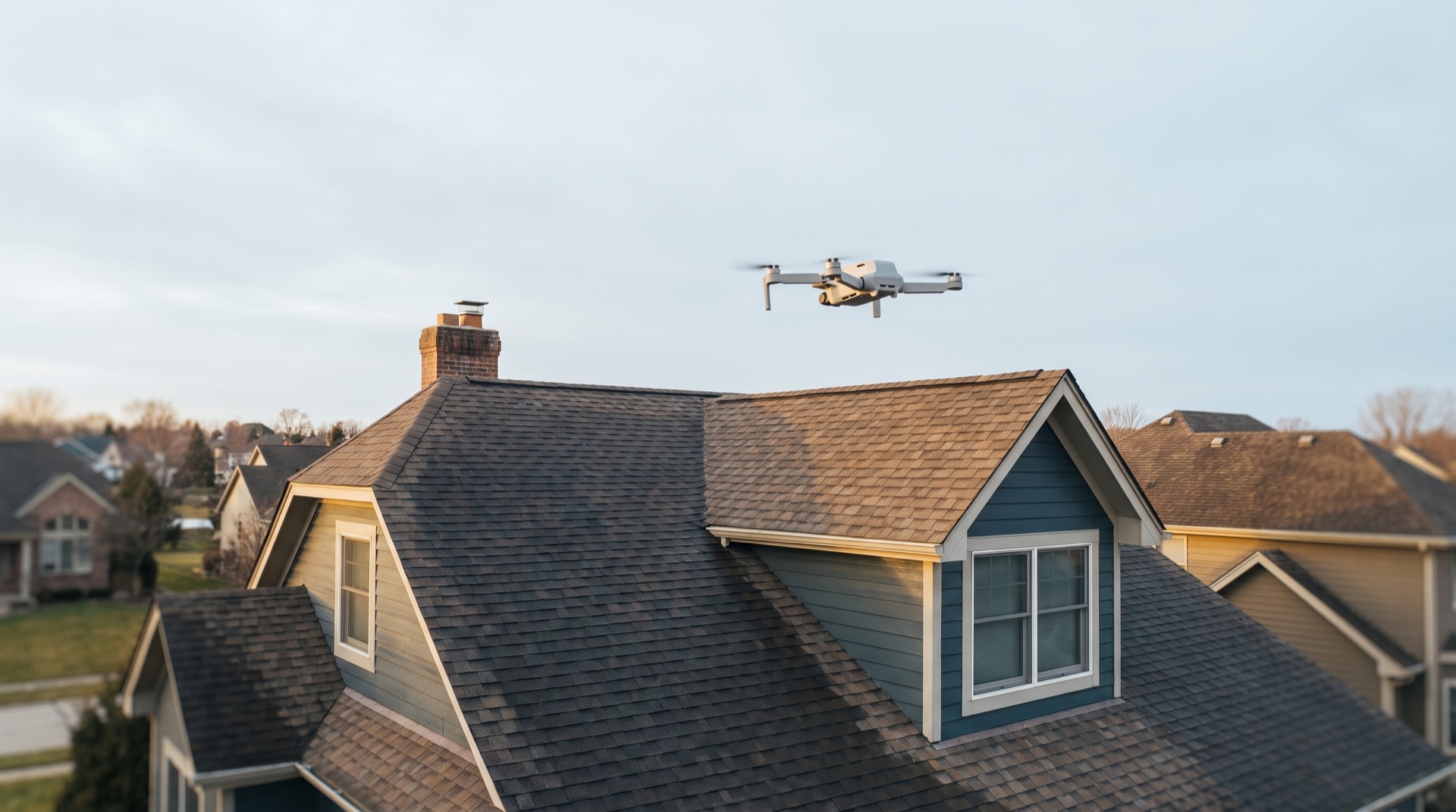
The catch is that "roof inspection" is not a defined product. It can mean twenty minutes with binoculars from the driveway, or a walked roof with the attic checked from underneath and a photographed report. Both get called an inspection and both get invoiced.
So settle the scope before it starts. The FTC's standard for a written estimate is a fair standard for this too: it "should include a description of the work to be done, materials, completion date, and the price." For an inspection, the useful version of that is whether the roof will be walked, droned or viewed from the ground, whether the attic and the underside of the deck are included, whether you get photographs and a written report, and what the total is.
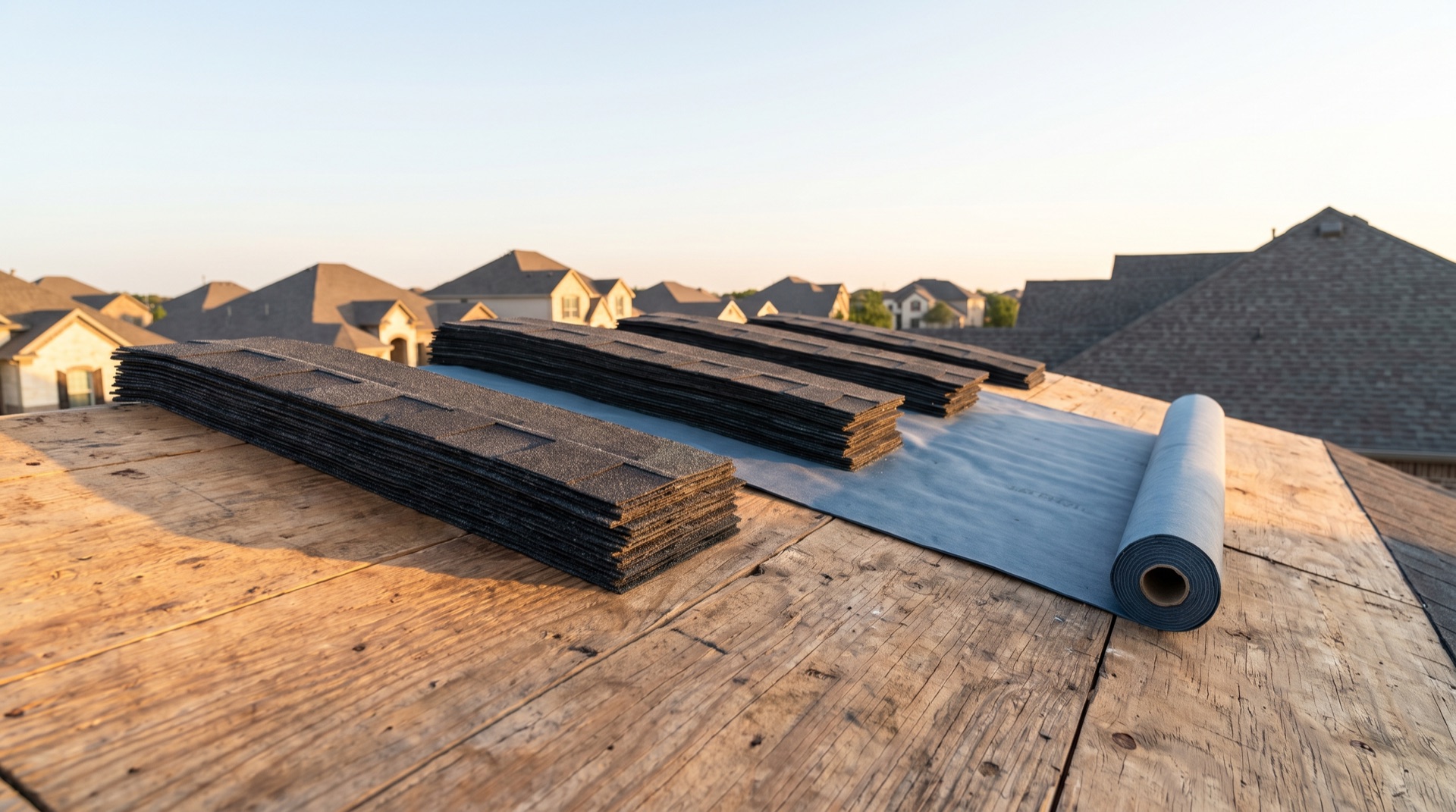
It also helps to know what there is to look at. The Insurance Institute for Business & Home Safety's Roof 101 describes a roof as a stack of layers rather than a surface: asphalt shingles are granules over asphalt over a fiberglass mat, with a sealant layer of "a softer asphalt that activates under the heat of the sun," and "underlayment is fastened to the roof deck first, and then the asphalt shingles are installed on top." IBHS describes the same layering for other coverings, with metal fixed direct-to-deck or over wooden battens that "allow for air circulation and ventilation," and tile either on battens or direct to deck with underlayment in between.
Most of those layers are invisible from the ground. IBHS says nothing about inspection methods, but the conclusion we draw from that description is our own and it is simple: a look that only reports on the visible face of the shingles has not been near anything underneath it. That is not a reason to distrust a ground-level look. It is a reason to know which one you bought.
The roof section of a home-sale inspection
This one is bought for a different reason: someone is about to buy a house and wants to know what they are taking on. HUD's For Your Protection: Get a Home Inspection form describes it as a service you arrange and pay a fee for, in which "a qualified inspector will take an unbiased look at your potential new home to evaluate its physical condition; estimate the remaining useful life of the major systems, equipment, structure, and finishes; and identify any items that need to be repaired or replaced." HUD notes that the inspection happens only if you arrange one, and that an appraisal is a different thing: it estimates the home's value for your lender and does not replace an inspection.
Two practical notes from those agencies. HUD suggests asking a prospective inspector for their Standards of Practice or a sample report, which is the fastest way to learn how much of the roof they actually cover. The CFPB advises attending the inspection if you can, because being there "makes it easier to interpret the inspection report, understand issues, and allow you to ask questions," and notes that if repairs are needed you may want to negotiate with the seller over who makes or pays for them.
The limit is scope. A whole-house inspection covers the roof alongside the furnace, the wiring, the plumbing and everything else, often in a few lines, sometimes from a ladder at the eaves rather than on the roof. If the roof is the thing you are worried about, that paragraph is a starting point, not the answer.
The adjuster visit
If you have filed a claim, the visit that follows is not something you shop for or pay for. The NAIC's Post-Disaster Claims Guide sets out the three kinds of adjuster and who pays each. A company adjuster "works only for that insurance company," and "the insurance company hires and pays a company adjuster"; the guide states flatly, "You do not pay a company adjuster." An independent adjuster works for several insurers, does the same job, and again: "You do not pay an independent adjuster." A public adjuster is the exception. That is "a professional you can hire to handle your insurance claim," with no ties to the insurer, and "you have to pay a public adjuster" — a flat fee or a percentage of the settlement, depending on your state's law. The guide also notes that many states license public adjusters and some prohibit them from negotiating claims for you, in which case only a licensed attorney can.
Hiring one does not remove the insurer's own visit. The NAIC says the insurance company "doesn't have to accept your public adjuster's estimates" and "will typically send either a company adjuster or an independent adjuster to assess and estimate damage."
The guide is specific about the visit itself. You should be there. The adjuster "will inspect your home and take photographs and measurements," may do some of the calculations on the spot, and will review your policy for deductibles and limits. If there is time beforehand, the NAIC suggests getting written bids from contractors: "You aren't required to have bids, but it can help. The bids should detail the materials to be used, prices of those materials, and labor on a line-by-line basis." On timing, it says a reasonable wait could be three to five days for a minor claim, longer after a large disaster.
What actually changes the price
Nobody official publishes a price list for this, so treat the rest of this section as our own practical explanation rather than a finding of any agency. For the two inspections you pay for, the number tends to move with a short list of things: the size, pitch and height of the roof, how many slopes and penetrations it has, how reachable it is, and whether the inspector walks it, flies a drone over it or looks from the ground. Adding the attic, a moisture meter or an infrared scan generally costs more, and a written, photographed report costs more than a verbal summary. Travel distance matters in rural areas, and availability tightens after a regional storm.
You will find plenty of confident national averages for this online. We do not repeat them, because no authoritative body publishes one, the figures move by region and by year, and an average calculated from someone else's submissions tells you nothing about your roof. Ask two or three local inspectors what they charge for the scope you have written down, and you will have a better number in an afternoon than any average can give you.
Once you have findings and the work is being priced, the comparison that matters is between bids on the same scope. Putting them side by side is where differences in materials, decking allowances and warranty terms show up.
Your options, in order
If the findings point past a patch, the roof replacement guide covers what the work involves and what moves that price.
Bottom line
Before you ask what a roof inspection costs, decide which inspection you want and who you want it working for. A contractor's free look is fine if you read it as a bid; a paid independent inspection buys you a report you own; a home-sale inspection covers the roof briefly among everything else; and your insurer's adjuster is not yours to arrange or pay for. Write down the scope before anyone starts, verify license and insurance with your state yourself, and give nobody your decision on the day they ask for it.
When the inspection turns into quotes, what to verify before you choose a roofer is the next page. If a storm prompted all this, the storm-damage inspection guide covers the order to do it in.
Common questions
Why are some roof inspections free and others cost money?
In our reading of how the trade works, a contractor's inspection is usually free because it is the first step of a sales call, and the contractor is paid if you hire them for the work. An inspection you commission from someone who will not bid on the job has a fee, because the fee is the only thing paying for their time.
Do I pay for the insurance adjuster to inspect my roof?
Not for your insurer's adjuster. The NAIC's Post-Disaster Claims Guide says the insurance company hires and pays a company adjuster, and that you do not pay a company adjuster or an independent adjuster. A public adjuster is different: you hire that person and you pay their fee.
Does a home inspection cover the roof?
It covers the roof as one item among many. HUD describes a home inspection as a qualified inspector evaluating the property's physical condition and estimating the remaining useful life of the major systems, equipment, structure and finishes. If the roof is the reason you are worried, a separate roof inspection goes deeper than that paragraph will.
What should I agree before a roof inspector starts?
Put in writing what is included and what it costs. The FTC says a written estimate should include a description of the work to be done, materials, completion date, and the price, and that you should confirm a contractor's license with your state or county and ask for proof of insurance.
Is a free roof inspection a scam?
Not by itself. It becomes a problem when it arrives with pressure: the FTC lists knocking on your door claiming to be in the area, leftover materials from another job, and pressure to decide immediately as warning signs, and says to walk away from anyone who wants cash up front.
Sources
- IBHS: Roof 101
- FTC Consumer Advice: How To Avoid a Home Improvement Scam
- FTC Consumer Advice: How To Avoid Scams After Weather Emergencies and Natural Disasters
- NAIC: Post-Disaster Claims Guide
- HUD: For Your Protection — Get a Home Inspection (HUD-92564-CN)
- CFPB: Schedule a home inspection
By RoofWise USA Editorial Team. First published September 17, 2026. Advertiser disclosure