Guide
Roof Leak Repair Cost: Stop the Water Before You Price It
A roof leak is a mitigation problem before it is a price problem. Stop the water, document the damage, then price the fix. What actually moves the cost.
Updated September 17, 20269 min readReviewed by RoofWise USA Editorial Team, editorial review: primary sources checked and independently fact-checked
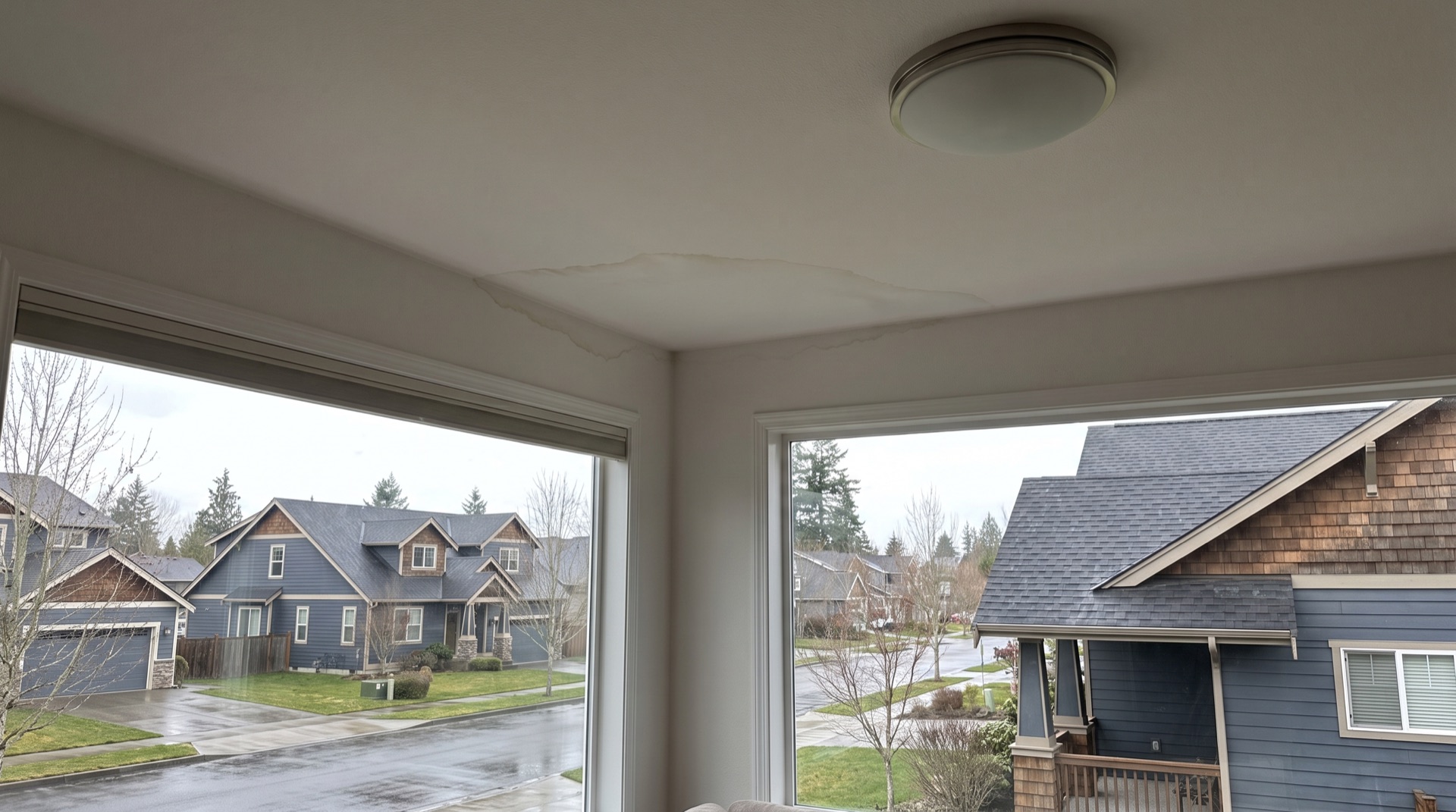
Before a roof leak repair cost means anything, the water has to stop. Most homeowners policies put the duty to limit further damage on you, the cause of the leak is what decides whether a claim is even on the table, and the price of the fix depends far more on where the water got in and how long it ran than on the size of the hole. So the order is: stop it, document it, then price it.
What to do in the first hour
Contain the water inside first: a bucket, a tarp on the floor, furniture moved clear. If a ceiling is bulging, it is holding water, and that is a good moment to keep people out of the room rather than to investigate.
Then photograph everything before you dry, move or fix anything. The NAIC's Post-Disaster Claims Guide tells homeowners to "take photos or videos of the damaged areas and personal property" and adds that "you also can jot down notes about any significant damage you see." Photographs taken before cleanup are the only version of the evidence that exists.
Then limit the damage, within what is safe. The same guide is direct about the duty: "try to prevent further damage by making essential repairs, like covering roofs, or windows with plywood, tarp, canvas, or other waterproof materials." It adds, in capitals, to keep all receipts for emergency repairs, and notes you may want to hire a contractor to do them. The NAIC's Consumer's Guide to Home Insurance says the same thing in one line: "You're also required to protect your home from further damage."
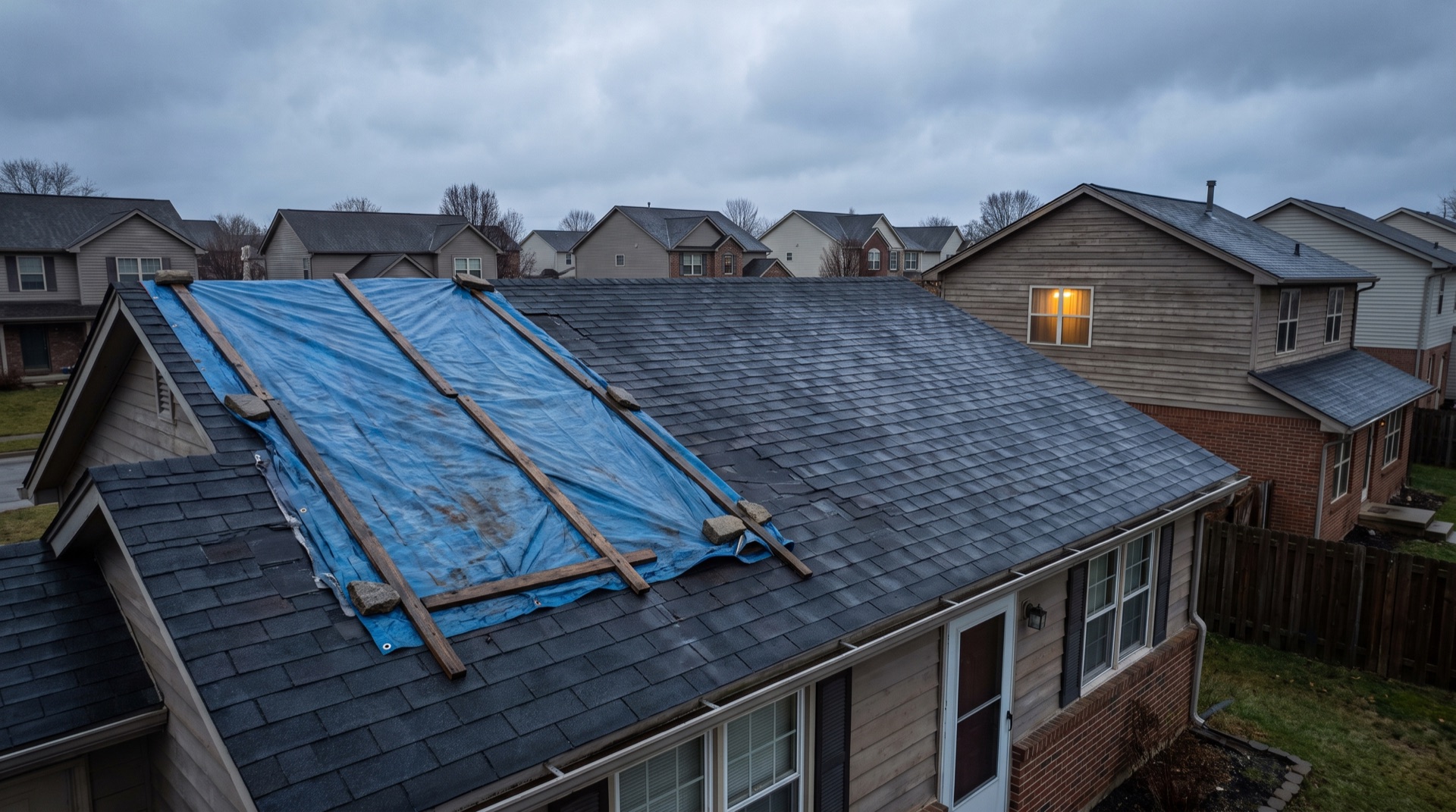
Drying is on a clock. The EPA's guide to mold and moisture says to dry water-damaged areas and items "within 24-48 hours to prevent mold growth," and warns that "if you clean up the mold, but don't fix the water problem, then, most likely, the mold problem will come back." That window is why a leak found on a Friday and left until Monday often costs more than the same leak found on a Monday.
Why the leak is almost never above the stain
This is the part the price pages skip, and it is the reason two identical-looking stains produce very different bills.
Water gets in at a fault in the covering, then runs. The National Park Service's Preservation Brief 39 describes the problem exactly: "Moisture is notorious for traveling far from the source, and moisture movement within concealed areas of the building construction make accurate diagnosis of the source and path difficult." It goes further: "Moisture from melting ice dams, leaks, and condensation often can travel great distances down walls and along construction surfaces, pipes, or conduits."
It also warns against the obvious conclusion. Ceiling stains, it notes, may come from leaking pipes, from drainage pans above, or from moisture that penetrated around something poorly sloped higher up. "Don't jump to conclusions, but use a systematic approach."
The systematic approach it describes is worth borrowing. Because moisture is affected by gravity, "many surveys start with the roof and guttering systems and work down through the exterior walls." Inside, "the interior should be recorded as well, beginning with the attic and working down." Sometimes materials have to be removed "in order to trace the path of moisture or to pinpoint a source."
Two practical consequences for the price. First, a competent diagnosis takes time, and a roofer who quotes a number over the phone from your description of a stain is quoting a guess. Second, part of what you are buying is the search, not just the patch. A bid that covers only the visible symptom can leave the actual entry point running.
What makes a roof leak repair cheap or expensive
Nobody can give you a national average worth acting on, and we do not publish one. What is knowable is which factors move the number, and every one of them is something you can check before the first quote.
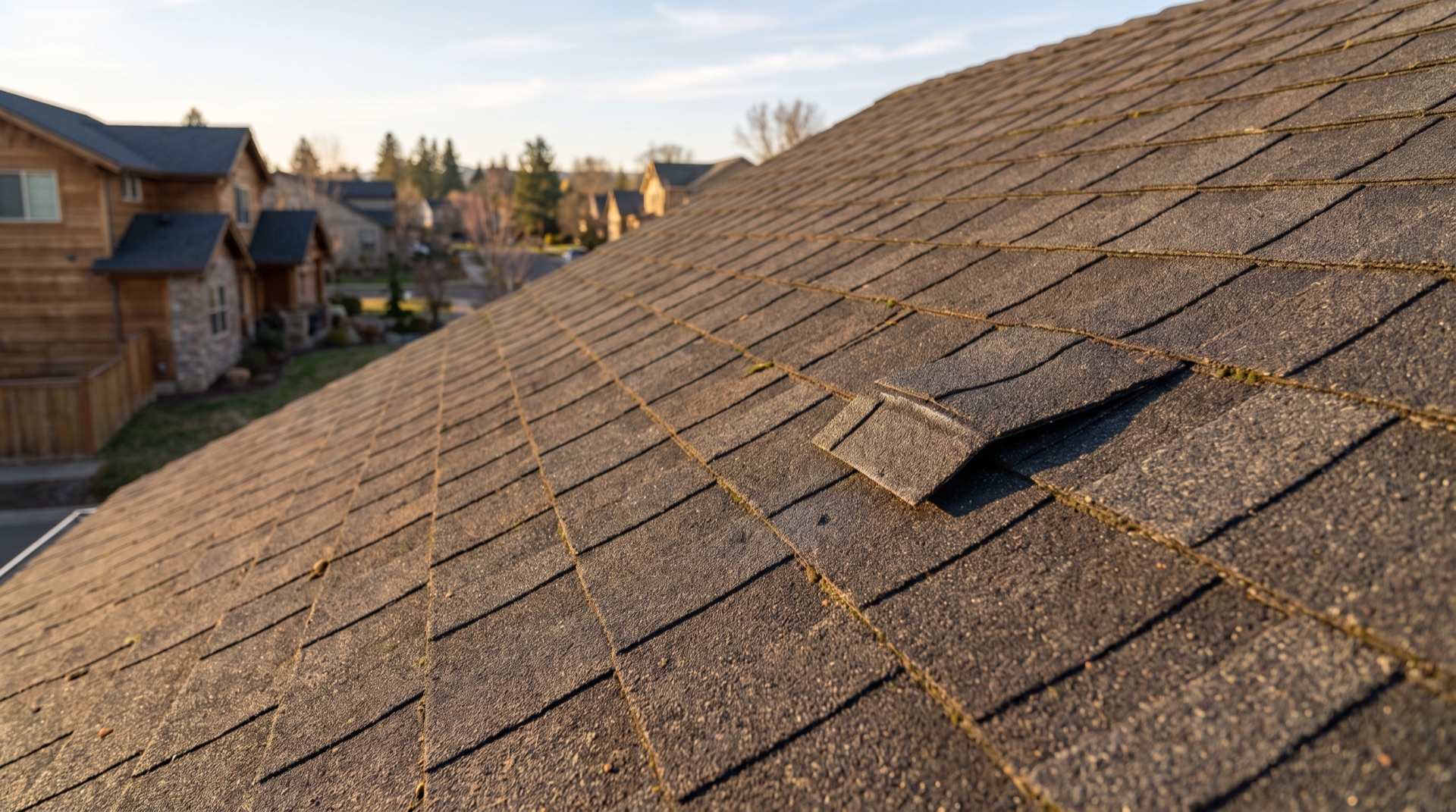
Where the water enters. A single lifted, cracked or missing shingle in the open field of a roof is the inexpensive end. Junctions are the expensive end: flashing at a chimney, a valley, a skylight, a wall or a vent stack has to be opened up and rebuilt, and the shingles around it come off and go back on to do it.
How far the water got. If it stopped at the underlayment and the deck, you are buying roof work. Once it reaches insulation, drywall and framing, you are buying two trades. The Department of Energy's Repairing Roofs & Ceilings brief — published in January 2006 and written for skilled do-it-yourself homeowners in the Gulf States region repairing storm-damaged homes, so read it as guidance for that situation rather than a national standard — is specific: "Wet insulation must be removed for the ceiling to dry properly," and drywall is only worth keeping if it "has only been wet by clean rainwater, is not sagging, is not mildewing, and has not lost its smooth texture."
How long it ran. The same brief says wood "should have a moisture content below 20% before you cover it," and that material which will not have time to dry before being covered again should not be reused. A slow leak that ran for two winters is a different repair from a leak that started last night, even if the stain looks the same size.
Whether the covering can be matched. An older or discontinued shingle means either a patch that will not match, or opening up a larger section to make it look right. That is a cosmetic decision with a real price attached, and it is yours to make.
Access. Steep pitch, height, a fragile covering, no safe ladder set-up, or a leak over a conservatory all add labor before anyone touches a shingle.
How many. One entry point on a covering with years left is straightforward repair territory. Several separate entry points on a worn covering is the point where repeated repairs start costing more than the alternative, which is the calculation worth running before you commit.
Why the cause of the leak decides more than the size of it
If you are thinking about a claim, the cause is the whole question. The NAIC's consumer guide opens its section on the types of homeowners policies — all of them, not just the narrow ones — with the same point: "To be reimbursed for damage to your property, a covered peril (such as fire, theft or windstorm) must have caused your loss." What changes between forms is which perils count. The Special Form, which the NAIC calls "the most popular of all homeowners forms," insures "against all perils, except those the policy specifically names as not covered," while the basic and broad forms insure only against the perils the policy lists.
Either way, maintenance sits outside it. The NAIC writes that "a homeowners policy isn't a maintenance contract; it insures against damage from perils such as fire, wind and hail. It doesn't pay to repair items that simply wear out," and names the example directly: you are "responsible for the upkeep of your home, such as repairing your roof when it begins to leak."
The deductible often settles the question before coverage does. The NAIC notes that "if the cost to repair the damage is not much more than your deductible, you might want to pay for the repairs without filing a claim," and that companies report claims to databases such as CLUE. It also flags two things people miss: some policies carry a separate deductible for wind, hurricane or storm losses, and "some policies also may have a special deductible that applies to a specific part of your home, like your roof." A roof can also be settled on actual cash value while the rest of the house is settled on replacement cost, which changes the arithmetic considerably on an older covering.
Your options, in order
The first one costs nothing and makes the other two cheaper.
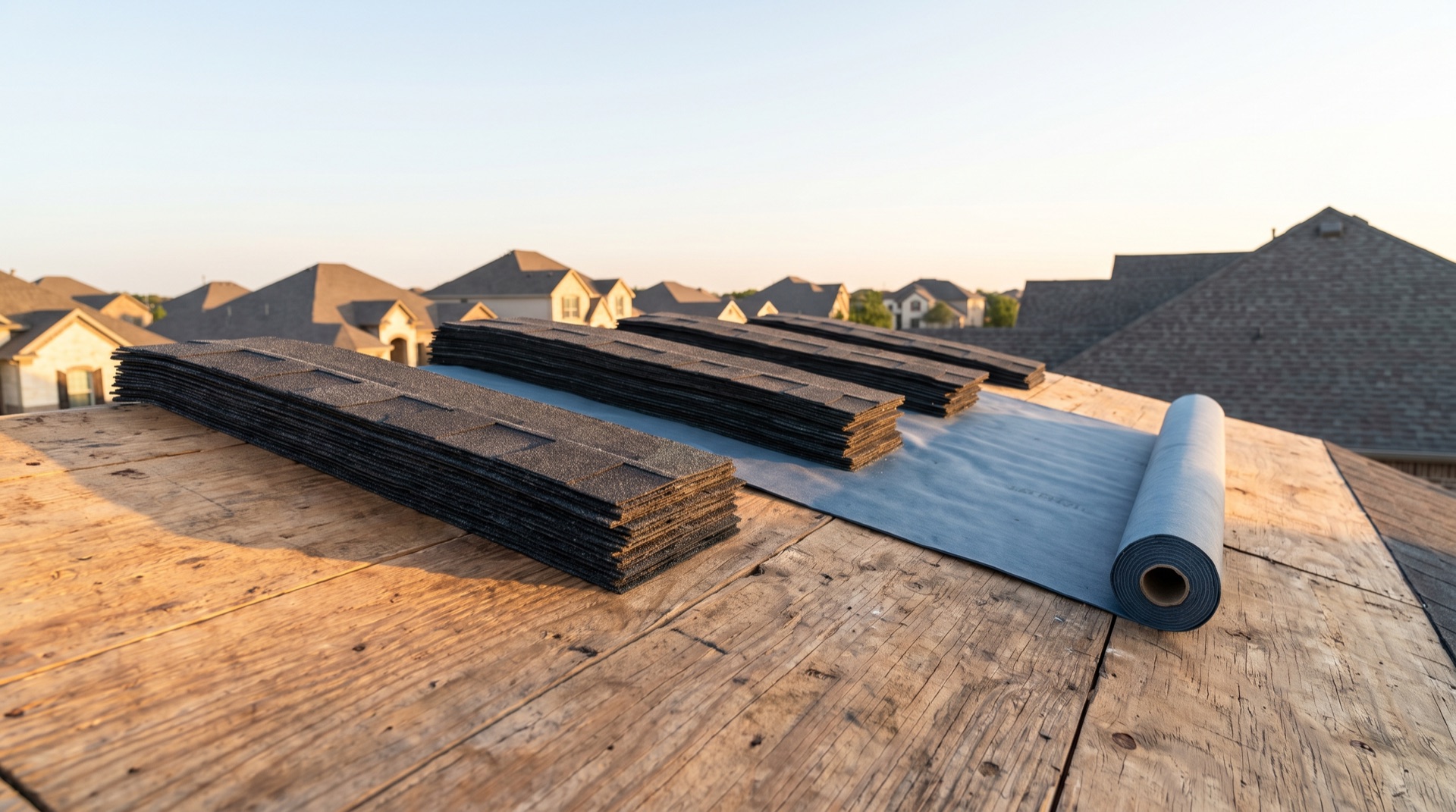
If the leak turns out to be one symptom of a covering that has run out of life, the decision widens, and the full roof replacement guide covers what that work involves and how to compare bids on one shared scope.
What the price pages leave out
Search this question and you get a price band in the first line of every result. Those bands come from contractor marketing sites and aggregators, not from anyone who has seen your roof, and no authoritative body publishes a national average for repairing a roof leak. The number is a number someone made up to rank for the search.
It is also unknowable in advance for a good reason. Until the covering comes off around the entry point, nobody knows how much decking is soft, how far the water tracked, or whether the flashing detail was wrong from the day it was built. An honest quote says what the diagnosis costs, what the likely repair costs, and what happens to the price if the deck underneath is wet. A quote that is one number with no conditions attached is either padded to cover the unknown or about to grow.
Bottom line
Deal with a leak in the order that protects both the house and your position: stop the water, photograph it before anything is moved, keep the receipts for emergency work, and hold off on permanent repairs until you have spoken to your insurer. Then get the entry point found properly, because the leak is rarely above the stain, and price the repair against what a replacement would cost rather than in isolation. If the covering is old and leaking in more than one place, repeated repairs are the expensive answer, not the cheap one.
If the leak turns out not to be the only one, repair against replacement gives you a way to compare the two honestly. For whether a policy responds to it at all, see does insurance cover a roof replacement.
Common questions
What should I do first when I find a roof leak?
Contain the water inside, photograph everything before you move or dry anything, and cover the opening if that can be done safely from the ground or a ladder. The NAIC's Post-Disaster Claims Guide tells homeowners to prevent further damage with essential repairs such as tarping, and to keep every receipt for that work.
Is the leak directly above the ceiling stain?
Usually not. The National Park Service's guidance on moisture in buildings says moisture is notorious for traveling far from its source, and that water from leaks can travel great distances along construction surfaces before it appears.
Does homeowners insurance cover a roof leak?
That depends entirely on the cause and on your own policy, and only your insurer can decide it. The NAIC is clear that a homeowners policy is not a maintenance contract and does not pay to repair things that simply wear out, so a leak from age sits in a different category from one caused by a covered event.
Should I file a claim for a roof leak?
That is your decision, and the deductible is the number that usually settles it. The NAIC notes that if the cost to repair the damage is not much more than your deductible, you might want to pay for the repairs without filing a claim.
What makes one roof leak repair cost far more than another?
Where the water enters and how far it got. A lifted shingle in the open field of a roof is the cheap end; a failed flashing at a chimney, valley or skylight means opening up and rebuilding that junction, and once insulation, drywall and framing are wet you are paying for interior work too.
Can I just patch it myself and deal with it later?
Temporary protection is different from a permanent repair. The NAIC advises against permanent repairs before speaking to your insurer, because a company may not pay for work it did not authorize, and the Department of Energy's repair guidance says to consult an agent before doing repair work when a claim is involved.
Sources
- NAIC: Post-Disaster Claims Guide
- NAIC: A Consumer's Guide to Home Insurance
- National Park Service, Preservation Brief 39: Holding the Line — Controlling Unwanted Moisture in Historic Buildings
- U.S. Department of Energy: Repairing Roofs & Ceilings (How To's for the Handy Homeowner)
- EPA: A Brief Guide to Mold, Moisture and Your Home
By RoofWise USA Editorial Team. First published September 17, 2026. Advertiser disclosure